HazardCo understands that on-site first aid is about more than just sending someone on a course every few years. As an employer or principal contractor on-site, you have a legal and moral obligation to make sure your team has access to first aid equipment and facilities, as well as access to trained first aiders.
To determine the necessary level for your workplace, assess the site by considering:
- The type of work being done
- Identified hazards
- Site size and location
- Number of people on-site and any vulnerable workers
- Conduct a first aid risk assessment to identify facilities, equipment, and training..
Don’t forget to involve your workers in the process and if you are working with multiple trades, or are the principal contractor, you should share information and work together cooperatively.
First Aid Kits
Having a first aid kit on a construction site is essential to quickly address injuries and medical emergencies. Great kits can be sourced from many places – a basic kit should include equipment t to tend to:
- cuts, scratches, punctures, grazes, and splinters
- soft tissue sprains and strains
- minor burns
- broken bones
- eye injuries
- shock
Basic first aid kits are not always enough given the nature of construction work and increased risk of eye injury, cuts, falls etc, so you’ll need to consider what other equipment to add e.g. eye pads, eyewash, additional dressings and bandages.
Include your team and see if they think your first aid kit is sufficient for the site hazards and team size… and make sure they know who the trained first aider is and where the first aid kit is kept! It helps if your first aid kit is clearly labeled and is made from a material that can protect the contents from dust, moisture and contamination.
Lastly, assign someone to be in charge of replenishing the kit. Make sure this happens regularly and keep a list of what’s supposed to be in the kit to make topping it up easier. At the same time, check training is up to date for your first aiders, and if your team size has changed, whether you still have enough team members trained in first aid.
Keeping first aid up to date is the right thing to do by your team, so make sure you’ve got things covered and that you’re all prepared if any sort of injury takes place.
If you have any questions please contact the HazardCo team today.
Did you know that if you’re carrying out renovation work the same risks apply as a new build? Whether you’re carrying out extensions, renovating, flood remedial work, large landscaping jobs or you’re engaging contractors for the work, HazardCo have you covered.
You will firstly need to think about how you will manage health and safety on-site and how you will communicate this with other people involved in the build, such as the homeowner, or other contractors on-site. This will ensure that everyone is on top of the site hazards and practicing good health and safety during your build.
HazardCo Projects
A HazardCo Project is ordered for each significant job, such as a new house build or large renovation. They contain site-specific resources for that job, including:
- A site specific safety plan (SSSP)
- A site specific Hazard Board
- Site specific QR code for inductions on first visit and scan in/out there after
- Resources to help you manage your on-site health and safety
- Project overview in the ‘HazardCo HUB’ for real time on site activity
- Ability to upload docs to be visible on the HazardCo app when workers scan into site.
How can you determine whether you need to order a HazardCo Project?
Have a read of the following 5 areas, if you meet these requirements a Project could be needed.
- Are you the principal contractor? – The principal contractor is the one that creates a Site Specific Safety Plan (SSSP) and this should be consulted and shared with all workers, including contractors involved in the work. This will ensure workers are aware of the risks and hazards that are involved in the job at hand. Throughout the job, there should be ongoing communication between all parties, and the risks reviewed regularly on-site. For more information around responsibilities check out our blog.
- The cost of the project – Depending on the State/Territory you operate in, if your construction project is over a certain financial threshold, then a SSSP is actually a legal requirement. With the exception of Western Australia, where a SSSP is legally required where 5 or more persons are likely to be working at the same time on the project.
- Will you be engaging contractors? – If contractors are going to be engaged in the work, then a Project will likely be needed, but this also depends on the type of work and length of the job. So if you’re unsure, just give us a call and we will be happy to assist.
- Will you be making any structural changes? – Ordering a project and setting up a SSSP will help identify the controls that will be put in place to manage risks. Generally this type of work can take time, and therefore we recommend ordering a Project and using the HazardCo App to assist your health and safety needs on-site.
- How old is the building? – Any property built before the year 2003, could contain asbestos. Creating a SSSP helps identify the controls that will be put in place to manage this risk. We also recommend that all trades complete an asbestos awareness course.
Even if none or only some of the above 5 areas apply, the HazardCo app and hub can still be used effectively outside of ordering a project. So keep reading.
Using HazardCo to manage health and safety
We recommend that you use the HazardCo App and Hub to manage your on-site health and safety. Here are our tips to get the most out of the HazardCo system:
- Workers should complete a Risk Assessment on the HazardCo App prior to starting work to make sure their work area is safe and the risks are being managed.
- Monitor works occurring on-site using the Site Review feature on the HazardCo App and identify any areas for improvement.
- Due to the nature of renovation work it is important that you consider noise and dust (examples; asbestos, silica and wood) and how you control these risks. For high risk construction work, use the SWMS feature in the HazardCo App. Ensure everyone involved is consulted during the preparation of the SWMS and have read, understood, and will follow the directions provided. You can find out more information on completing SWMS by clicking here.
- Share and capture what’s happening on-site, and upcoming works with workers through the Toolbox Meeting feature on the HazardCo App. This demonstrates good consultation and communication with your team.
- Record incidents on-site using the HazardCo App. Any incident, illness or near-miss can be recorded. Check out the HazardCo Hub for your Incident Register which gets automatically updated when you log incidents using the HazardCo app.
- Use the task function to report hazards and track health and safety actions.
- If you have people living on-site during the renovation work, you should be setting your health and safety expectations from the start. There is an easily editable Client Health & Safety Requirements letter in the Hub you can tailor to your job. This outlines your site requirements on keeping the homeowners safe during and outside of working hours.
- As part of your membership, you have 24/7 incident support and general support during business hours via 1800 954 702.
Lastly, sometimes renovation projects can be unique and you may still feel unsure about whether you should order a project or how the HazardCo system can help you to manage Health and Safety effectively. So give us a call and we can chat about your upcoming works and how HazardCo may work best for you. So don’t be shy – get in touch with us and we’ll help you make your site a safer one.
Maintaining clean amenities is just as important as keeping your site nice and tidy. Employers have a duty to provide adequate workplace amenities/facilities, including toilets, that are in good working order, clean, safe and accessible.
Not meeting these requirements can lead to a risk of infection, disease, psychosocial harm or infringements/enforcement from the Regulator. Regulators often actively check work sites to ensure workers have access to clean and safe amenities.
When planning amenities on your site, consult with your workers to understand what will be needed. Getting them involved will give you the opportunity to provide information, training and instruction on things like keeping the site amenities clean and reporting any problems.
Portable Toilets
More often than not portable toilets are not maintained in a safe or hygienic way. Employers must make sure that toilets are cleaned and serviced regularly, and, just like plant and other on-site equipment, safe to use and operated the way it was designed to be used.
Toilets should also:
- Be fitted with a hinged seat and lid
- Be provided with a door that can be locked from the inside
- Have enough water for flushing and washing hands
- Stocked with toilet paper, rubbish bins and hygienic means to dispose of sanitary items
- Supplied with soap or a suitable alternative such as alcohol based sanitiser
Don’t forget, the toilet should be easy to access in all weather conditions and be placed on stable, flat ground to ensure it can operate properly.
Drinking water
Clean drinking water must be supplied to workers by installing site water taps as early as possible. If the mains have not been connected, provide workers with drinking water in containers, coolers or flasks.
Meal and shelter facilities
Workers should have a clean and weatherproof area for meals and rest breaks. Using the garage or a similar sheltered area can be used and be set up as soon as possible. If they aren’t available on-site, workers should be given enough time on their breaks to access eating facilities off-site. Facilities should also include:
- Adequate seating
- Hygienic surfaces for meals
- Rubbish bins and arrangements for regularly disposing rubbish and waste materials
In the early stages of construction a worker can use their vehicle for shelter until a suitable area becomes available.
As always, if you have any questions please give our team a call on 1800 954 702 or contact us.
The reality is unsafe work at heights can have devastating consequences. Falls from heights are one of the leading causes of fatalities and injuries in the construction industry within Australia. Preventing falls should be actively managed so that people working at heights are kept safe.
Plan Ahead: Before you start a job, figure out what could go wrong
Identifying a task that could lead to a fall is the first step to keeping people safe. Before commencing, put in place the highest level of protection possible to prevent falls.
Consider how long the job will take: The duration of the job will impact how you select the level of protection. If the job is ongoing, the structures chosen need to remain stable throughout the job. You may need to reassess things like ladders and scaffolds throughout the job.
Use hierarchy of controls to prevent falls
The hierarchy of controls outlines the various controls in order from the highest level of protection to the lowest level of protection. Select the safest, most appropriate control measure from the below hierarchy to prevent injuries or fatalities from falls from heights on your site.
Work on the ground or solid construction
If you can avoid working at height it should be your first option and is always the safest option. Some examples of eliminating the fall risk include using long-handled tools, relocating the task to the ground, and using extension poles for tools.
Use fall-prevention measures
If working from a height is necessary, you need to manage the risk of a fall. Fall prevention measures could be something like an elevated work platform, scaffolding, or guard railing.
Use a work positioning system
Check if a work positioning system like a travel restraint system can be used. A travel restraint system enables a person to work in a way that prevents the person from falling e.g. fixed-length lanyards and static line systems
Use a fall arrest system
Check if a fall arrest system like an industrial safety net, a catch platform or safety harness can be used. This system doesn’t prevent the fall but arrests the fall so you don’t come into contact with the ground e.g. shock absorber on lanyard or anchor point.
Ladder use
It may be appropriate to use a ladder. Ladders do not provide fall protection and as such should only be looked at as a last option when selecting the level of protection. Ladders should only be used for short duration works such as changing a light bulb or paint touch-ups.
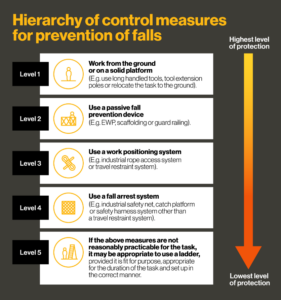
Below is a great image from WorkSafe Victoria which has summarised the hierarchy of control measures for the prevention of falls. Click on the image below to view
Important: Where high-risk construction work includes a risk of a person falling more than 2 metres (3 metres in South Australia), a safe work method statement (SWMS) must be developed prior to work commencing.
Need more information?
Seek professional assistance
Working at height can often be high risk and there are experts who make it their job to complete this work safely. It is often safer and more cost-effective to use height specialists even for shorter jobs.
Make sure everyone knows what to do
Give your workers all the info they need to stay safe.. Conduct toolbox talks and remind them the importance of procedures and completing a SWMS (when required). Encourage them to watch out for each other and speak up if something doesn’t seem right.
Consistency is key
It’s important you and your team are actively involved in ensuring any heights related work is carried out in the safest way possible.
Resources
There are various WorkSafe / SafeWork websites, resources, and support tools on managing the risk of falls. Some examples include:
Need Help?
If you’ve got a question about working at height or any other health and safety matter, the HazardCo Advisory Team is here to help. Give them a call on 1800 954 702.
For building companies, scalability isn’t just a buzzword – it’s a necessity. Paul Dugdale of ARCA and Dale Spencer of Southern Ocean Building and Consulting (SOBAC), are shedding light on the importance of systems and technology when it comes to running an efficient, successful building company. Let’s dig into some key lessons from these experts.
Lesson 1: Find the right people
Getting the right people on board and equipping them with the right tools and systems is the first step in scaling your business. To do this, identify bottlenecks in your existing processes and work out how to relieve these through either automation, delegation, or elimination. Being proactive and identifying what the critical points are in your business and making sure these run smoothly is a great way to make your business more efficient.
Lesson 2: Get on top of your financial forecasting
Knowing exactly where you are and if you are on track (or not) with your budgets is key to making sure your business succeeds. Being able to forecast to identify any problems, allows you to make changes to manage these. The best way to do this is to use integrated software that gives you oversight across your business and can also make financial forecasting more efficient which saves you time and frees you up to work on other parts of your business.
Lesson 3: Systemise your business
At the heart of scalability lies the ability to use software and systems to improve efficiency. The key is to use simple systems that offer both high-level overviews and can also easily drill down into the details, empowering the right people to make informed decisions quickly and easily.
Lesson 4: Embrace the suffering
Running a business is hard! And even our experts admit that there’s always something that pops up to keep you on your toes. Having the confidence to know that whatever tomorrow brings because you have created strong and resilient systems in your business you will be able to deal with those problems, gain knowledge from them and create a strategy to fix them, will mean that you will continue to build a successful business.
Remember you can’t do it all so finding the right way to do it is the key to success.
Watch the full video to discover the systems and integrations that Paul and Dale have used to successfully scale and take their business to the next level.
Running a safe site isn’t just about wearing hard hats and harnesses; it’s about effective communication and staying aware of what’s going on on-site. One of the most powerful tools is the humble toolbox meeting. These gatherings are the backbone of ensuring everyone on site is up to speed with hazards and safe working practices.
Download the Simple Guide to toolbox meetings to get tonnes of ideas for toolbox meeting topics.
Why toolbox meetings matter
Toolbox meetings are a forum to highlight safety expectations and encourage participation from everyone on site. They don’t need to be lengthy; a quick stand-up meeting will do – maybe even with a side of chocky biscuits to sweeten the deal! We recommend holding these meetings weekly, or at least twice a month, to keep safety at the front of everyone’s minds.
Some building companies take it a step further by incorporating toolbox meetings into their daily routine. Starting each day with a brief safety discussion helps to make safety a daily habit, rather than an afterthought.
Running an effective toolbox meeting
The success of a toolbox meeting hinges on a few key factors:
- Planning: Choose a suitable meeting time, decide who needs to be present, and give them advance notice.
- Engagement: Keep the tone friendly and conversational. It’s not a lecture, it’s a discussion among teammates. This approach encourages everyone to get involved and share ideas.
- Leadership: Lead by example. Clearly outline your expectations and make sure you’re walking the talk.
- Simplicity: Avoid jargon and keep the discussion easy to understand
- Importance: Emphasize that attending these meetings is an important part of everyone’s job.
- Focus: Stick to one or two topics per meeting
- Documentation: Keep a record of attendees and discussion points, the HazardCo App makes this simple.
Topics to discuss
Here are some prompts to kickstart discussions in your toolbox meetings:
Toolbox meetings help with communication, collaboration, and continual improvement. Remember, safety is a team effort, and toolbox meetings are where that effort begins.
The HazardCo App includes all the on-site safety reports you need, such as a handy tool to record toolbox meetings.
Get a 7 day free trial.
We all know subcontractors need to complete their SWMS before starting any high-risk construction work but did you know that as the principal contractor, you also need to ensure that a SWMS has been prepared before their work starts?
With HazardCo, it’s easy to stay on top of health and safety activity from your subbies.
Project Plus unlocks the HazardCo app for all of your subbies and it automatically shares the required reports with you, taking the hard yakka out of health & safety for everyone.
With HazardCo, your subbies can easily complete and share their SWMS and other on-site health and safety activity with you. The SWMS form guides your subbies through a step by step creation process. It gives you both confidence that potential hazards have been thought through and controls put in place to avoid harm.
With every report digitally stored on the Hub, you don’t need to chase paperwork or file it away… all your site’s health and safety documents are kept in the one place, which you can access from anywhere, at any time.
When all of your subbies are using HazardCo your on-site management becomes easier, you’re not bogged down with paperwork and all SWMS are in the same format making it faster to review than having to wrap your head around different templates.
SWMS are an essential part of managing health and safety on your site. HazardCo’s clever app makes it even easier for your subbies to create their SWMS and share it with you quickly – keeping your site safe and saving you time every day.
For help getting your subbies signed up, call the HazardCo team today on 1800 954 702.
It’s never good to find out the hard way that there’s a gas, power, water or communications line buried right where you need to put something on your site. When planning for excavation works, it is important to implement safe excavation practices to minimise the risk of injury and hitting critical services.
Digging blind can result in construction delays, increased costs and serious incidents.
What is the definition of excavation?
Excavation work is referred to as any work involving the removal of soil or rock from a site to form an open face, hole or cavity, using tools, machinery or explosives. This includes open excavations, potholing, pit excavations, trenches, retaining walls and shafts and tunnels.
What are my legal obligations?
Employers have a legal duty of care to take reasonable actions to protect both the people and the services which may be affected by their work. Getting and using the appropriate information on the services is an important part of ensuring safe excavation on your site. There is a large range of options this can cover, so we will cover the basics in this article. If you have more complex excavations and want advice then get in contact with us.
Remember any ground disturbance regardless of depth can damage infrastructure networks like gas, water, electricity so you need to get the right information to keep you & the underground services safe.
Where do I start to prevent incidents on-site, protect workers and prevent asset damage?
First, you need to get information on what the assets in the area may be. You can get this information from Before You Dig Australia. This online system is the easiest way to request known plans from the asset owners. It is important to know that not all Asset Owners are members of Before You Dig Australia, so it cannot show you everything that is in the area of your excavation. You may need to contact any other asset owners directly to get hold of plans, drawings and information regarding their assets known positions prior to starting your work.
Wait to receive all information on the assets before commencing work, and only refer to plans that are current.
Once you have information on the assets, make sure the plans are with the workers on-site and that they have appropriate health and safety information and instruction. This information must also be made available to the principal contractor and other subcontractors, and be easily available for inspection for the duration of the work. If you have a notifiable incident the information must be kept for at least 2 years. You should also isolate work around the underground assets from the public.
Pay attention to the clues around your site such as marker posts, inspection points and metres. Never assume pipes and cables run underground in a straight line or are at their correctly specified depth, and always assume all lines are live, even if they look as though they are abandoned or decommissioned.
Remember all digging activities can damage underground infrastructure. You should conduct a risk assessment for the task so that you can identify the hazards to focus on, and put in place suitable controls. Workers involved in the excavation need to be trained and competent to do their part of the work e.g the Excavator operator is appropriately licensed.
Quick tips: The 5 P’s for safe excavation
To minimise the risk of damage and potential loss of life, it’s best practice to follow the 5 P’s for safe excavation:
Plan – Plan ahead by lodging your Before You Dig Australia enquiry at least two business days before your project begins, and make sure you have the correct information required to not just carry out the work but how to respond to any possible emergencies.
Prepare – Prepare by reviewing all available plans from the asset owners and ensure you conduct a visual inspection of the site for any items such as put lids, marker posts, external vents and any other visual clue for service location prior to commencing works. If you need further verification you could have Ground Penetrating Radar (GPR) carried out to show exactly where buried things are.
Pothole – To confirm the exact location of the underground infrastructure(s), pothole if permitted using the asset owner’s stated method as specified on the asset owner’s plan and information pack. Work slowly on this as you’re actually trying to “hit” it but without damaging it.
Protect – If potholing has occurred, protect the infrastructure by using various methods; such as communicating to all working on site, erecting barriers and marking the location of the exposed infrastructure.
Proceed – You should only proceed with your excavation work after you have planned, potholed (unless prohibited) and have your necessary protective measures in place.
Remember to stay vigilant and watch for changes in the ground/soil as you dig.
Need Help?
If you’ve got a question about safe excavation or any other health and safety matter, our HazardCo Advisory Team is here to help. Give us a call on 1800 954 702.
Need more information?
Before You Dig Australia has resources available for your state or territory and best practice guidelines. Read our blog on Managing the health and safety risks associated with excavation work.
Get your team involved in health and safety, and watch your workplace become a safer, happier place for everyone.
Understanding your health and safety requirements to your workers
Under health and safety legislation, businesses have a duty to engage with workers and enable them to participate in improving health and safety. The business must:
- Ensure that workers’ views on health and safety matters are asked for and considered (within reason), and
- Have clear, effective, and on-going ways for workers to suggest improvements or raise concerns on a regular basis.
Remember that your subbies are also considered your workers when they are working for you.
Worker Participation and Engagement
Together with your workers, you can determine the best way to meet these requirements. What is reasonable and practicable will depend on your workers’ views and needs, the size of your business, and the nature of its risks.
Businesses must:
- Share information about health and safety
- Allow your workers time to think about these issues
- Give your workers a chance to:
- Share their thoughts and raise health and safety concerns, and
- Let them be part of the decision-making process
- Consider and listen to what your workers have to say
- Tell them about the outcomes promptly in a timely way
When is engagement required?
You will need to engage and consult with workers who are directly affected by a matter relating to health and safety. This includes when:
- Hazards are identified and assessed
- Making decisions about:
- Addressing risks
- The suitability of worksite facilities e.g toilets, hand washing, drinking water
- Monitoring worker health and work conditions
- Providing information and training to workers
- Procedures for resolving work health and safety issues
- Proposing changes that may affect the health and safety of workers
Worker Participation
It’s important to have meaningful and effective health and safety talks. It’s good for people and for business. This doesn’t mean hour-long talks or lots of documentation, it’s simply about approaching H&S with the right attitude and aiming to get everyone involved.
HazardCo makes it even simpler to do this with our ‘Toolbox Meeting’ feature on our HazardCo App – handy for making sure everyone on-site is keeping on top of what’s going on.
If you need a hand getting started or would like more information, get in touch with the friendly HazardCo team today.
In the world of construction, it’s common for duties and health and safety responsibilities to overlap. This can be managed simply – just follow the three C’s – Consultation, Cooperation, and Coordination and you’re on your way to a safer work site!
The role of the Employer
Basically, an Employer is required to ensure the health and safety of their workers, contractors or any visitors who might be affected by work operations.
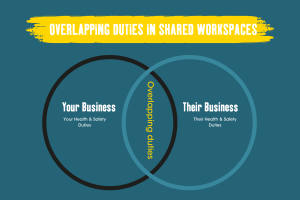
On-site this means that there can be a lot of overlapping duties, so the principal contractor is responsible for coordinating with other businesses/trades/subcontractors so they can all meet their combined responsibilities. See the image below:
When does this apply?
When there are multiple businesses at the same site, each business must do what they can, within their control, to keep workers safe. In these situations, the most effective way to manage workplace health and safety is by working together.
The Three C’s – Consultation, Cooperation & Coordination
By following the three C’s everyone will be aware of their overlapping duties, so roles can be clearly defined and work isn’t impacted.
Consultation
Consultation between businesses can help you all reach a common understanding and establish clear roles, responsibilities, and actions in relation to work health and safety. Consultation could require discussions around:
- What work activities are being carried out, how and by who
- The degree of influence and control each business has over the workplace (eg. contracts/written agreements)
- Who will manage what and how (eg. notifying incidents)
- What systems will be put in place to monitor compliance (eg. reviewing the site, how often and who by)
- What ongoing communication looks like between themselves and between the workers (eg. toolbox meetings/newsletters/points of contact)
Cooperation
From the consultation comes cooperation. This simply means sharing information and working together to put in place systems for managing and controlling risk agreed during the consultation process. Working together can increase the scope of the hazards recognised – ultimately making the site safer!
Coordination
And last but not least – now actually making sure everything works well together. Businesses should be able to coordinate on what systems will be implemented to control risks. This isn’t about one business pushing all the duties down on another, it’s about everyone involved working together to avoid duplication, or worse, health and safety risks.
The Benefits
What may seem like a hassle at first, is actually a huge benefit to life on-site. Keeping people safe should always be the top priority on any construction site – and of course, Health and safety laws actually require this to be the case. Aligning yourself with other Employers on site and knowing what safety systems are in place is vital and can save lives.
I am a principal contractor, what should I do?
If you are a principal contractor you must document the arrangements in place for consultation, cooperation, and coordination between all the different Employers at your site in your Site Specific Safety Plan (SSSP). The HazardCo system will guide you through creating a SSSP for each of your sites – Test drive the SSSP generator.
Managing your contractors and their H&S responsibilities is easy with the HazardCo system. You’ll get all the tools you need to pre-qualify contractors and check their H&S systems are up to scratch, plus everyone will be able to use the guided HazardCo app on site to create SWMS, log toolbox meetings and more. Get a 7-day HazardCo trial.
If you are a contractor and you have questions on how to best work with other businesses or the process you should follow, have a look at our Overlapping Duties: Working with other businesses blog.
Looking for something in particular?
Running a building business is hard at the best of times. Right now, with fuel prices putting pressure on the industry, a lot of business owners are carrying a weight that goes well beyond the...
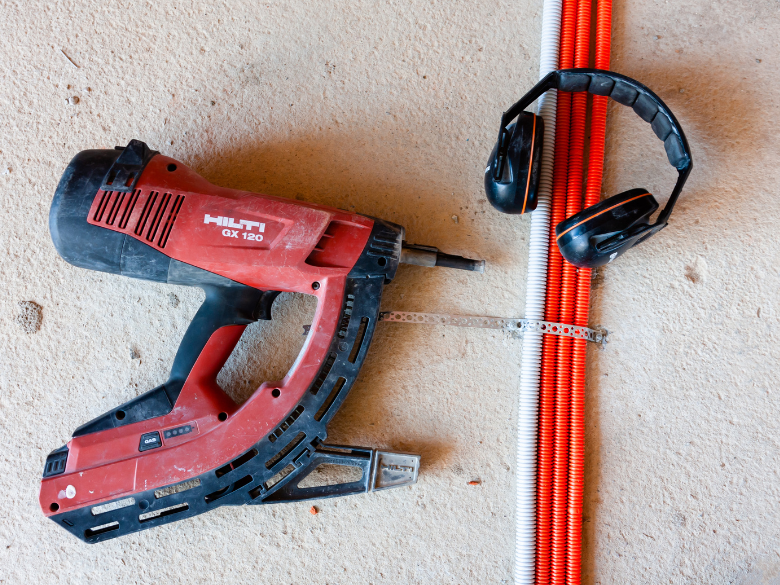
Nail guns are common on residential builds. Like any power tool, they can cause serious injuries if not used properly.
Most injuries happen when the gun discharges while being moved or repo...

Kick off the New Year safely on site
The holidays are done and dusted, and it’s time to ease back into work. Reopening your site safely is just as important as shutting it down properly and t...

Got lone workers on your team? Here’s what you need to know
If someone on your team is working by themselves without other people around and without direct supervision, they’re likely conside...
Take the Hassle Out of Toolbox Meetings.
Toolbox meetings don’t need to be a paperwork mission. With the HazardCo App, you can run quick, focused chats straight from your phone. No prep, no p...

When you have an incident on-site, whether it’s a near miss, an injury, or a work-related illness, it’s important to document an incident report.
Incident reports don’t need to be time-cons...

Electricity is essential on construction sites, but if the risks are not managed properly, it can pose serious dangers to people and property. Proper controls must be in place wherever electri...

Health and safety is a core part of any business but incidents and injuries on the job can still happen. According to SafeWork Australia, in the construction industry alone there were 15,877 s...

In light of the recent changes to Australia’s industrial manslaughter laws, we sat down with Glenn, one of our HazardCo Health and Safety (H&S) experts to break down what these laws mean f...
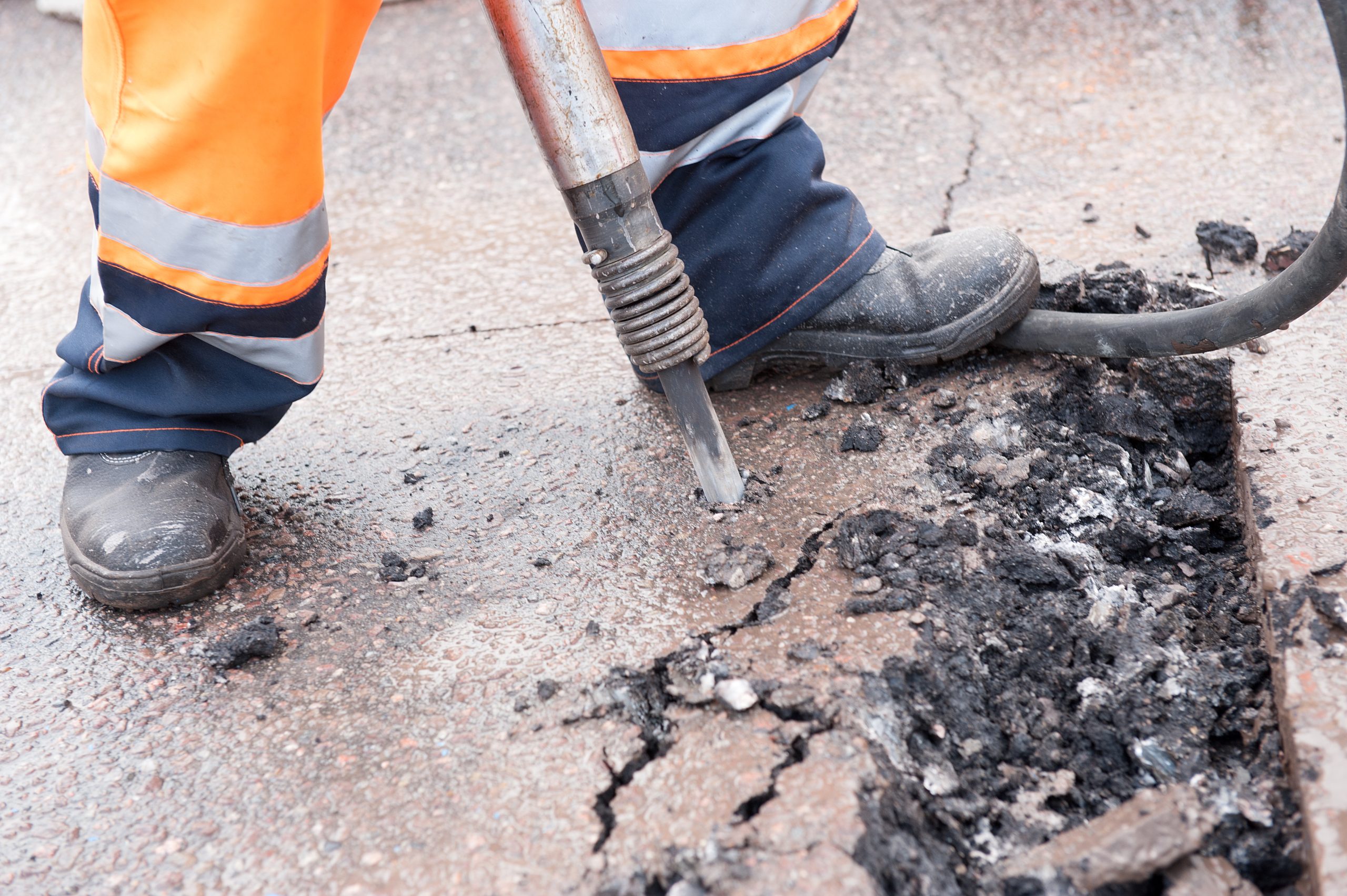
You’re probably across the recent engineered stone ban, but did you know SafeWork Australia has just come out with new rules to further protect workers from crystalline silica found in other b...

HazardCo understands that on-site first aid is about more than just sending someone on a course every few years. As an employer or principal contractor on-site, you have a legal and moral obli...

Did you know that if you’re carrying out renovation work the same risks apply as a new build? Whether you’re carrying out extensions, renovating, flood remedial work, large landscaping jobs or...