It’s important to have the right kind of insurance in place to manage risks and keep your business moving if anything goes wrong, especially if you work in construction and trades and you’re footing the bill if it all goes belly up. Contract works insurance will ensure your construction project is protected from start to completion.
Contract works insurance
Contract works insurance covers your project during the construction stage and protects you from accidental loss or damage due to fire, flood, storm, vandalism, or theft during the build.
What is contract works insurance?
Contract Works insurance is designed to cover accidental and sudden physical loss or damage to the project that is insured during the construction stage.
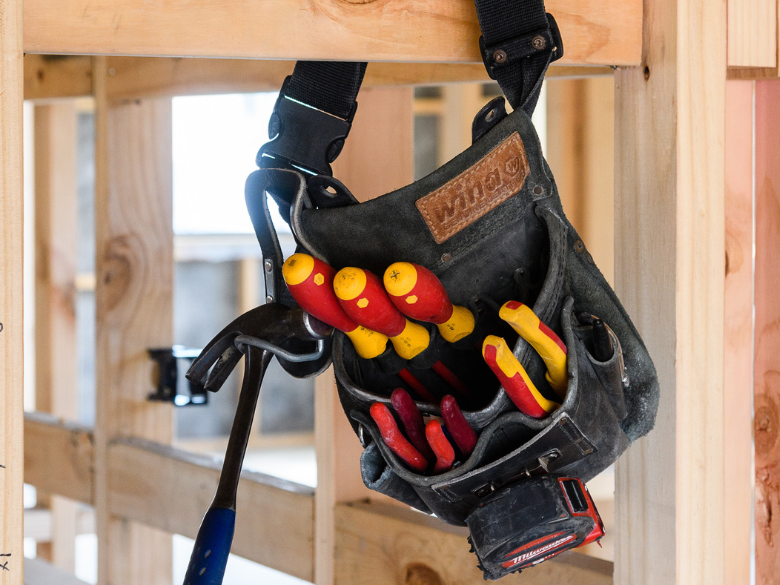
When you work in the trade industry, your tools are your lifeline. If anything goes missing, you need it replaced. Depending on your policy, this could also include the cost of the labour, materials and tools required in order to get the job back on track.
What could a Contracts Works policy cover?
- Natural disasters, such as bushfires, fire, earthquakes, flood and water damage, subsidence and landslip, storm, tsunami, or wind.
- Building materials, equipment, or tools being transported to your building site.
- Theft, vandalism, and arson of construction work and materials.
- Loss and accidental damage while building work is being carried out.
Who is responsible for arranging cover?
For new builds, contract works is required and the builder or construction company usually arranges this cover. However, If renovations or alterations are being done to an existing structure, the responsibility will fall on the owner.
There are two main types of Contract Works policies. Depending on your situation, you may want a one-off contract and look at this project by project, or an annual policy for someone who regularly builds new homes.
Who needs this?
- Tradespeople who run their own projects
- Builder Business Owners
- Sub-contractors
As a business owner, the key to success is minimising any potential risks for your company.
Why do you need contract works insurance?
If any one of the below happened to you, it’s important you have Contract Works in place to keep you covered.
To protect from vandalism and theft
A construction company was vandalised by a digger that was on-site and was facing a total rebuild of over $200,000 after someone demolished a house during the night. Check out the article here.
To protect from natural disasters
If there is a natural disaster such as a fire, earthquake, flood and water damage, subsidence and landslip, storm, tsunami or wind. Contract Works insurance puts your mind at ease by keeping you covered.
To protect building materials and tools being sent to your building site
If any equipment that’s being sent to your site gets damaged, lost or delayed then contract works insurance can help.
To protect from accidental damage while work is being carried out
This could cover an accidental nail through a water pipe, causing internal flooding or roof trusses collapsing after a load-bearing wall was removed.
We want to help you protect your crew and your business. That’s why we’ve partnered with Cactus Insurance to make it super easy to protect your site from start to finish.
Cactus are just like us, created by tradies for tradies to make insurance simple. They offer straightforward policies with everything you need and nothing you don’t.
Find out more here.
Using machinery and equipment for work on-site puts workers in close contact with powerful and fast moving tools. This makes getting the job done easier and more efficient but it does also present some risks to workers health and safety. If a worker comes into contact with machinery or equipment in an unsafe way, it can cause significant harm or injury. It is common practice to use guarding on machinery and equipment to create a barrier between the workers and the moving parts that can cause harm or injury.
Common risks and Hazards
Machinery and equipment guarding is designed to eliminate or minimise the risk of workers being harmed while completing their work. It is important to assess the hazards and risks involved with all the machinery and equipment used in the workplace. If machinery and equipment is not guarded properly, workers can sustain significant injuries due to coming in contact with moving parts.
Some common injuries are:
- Cuts
- Burns
- Electric Shocks
- Degloving
- Amputations
Because there is potential for serious harm when using machinery and equipment, it is necessary to plan a safe approach when conducting a job. This will help identify the hazards of working with machinery and equipment.
The hazard management process includes:
- Identifying hazards
- Assessing the hazard – decide if the identified hazards are significant
- Assessing the risk – decide how likely and seriously a worker could be harmed
- Controlling the hazard – either by eliminating, isolating or minimising the hazard
- Creating a hazard register to document the hazard
- Regularly reviewing and monitoring the hazards and risks.
- Create safe working methods like Standard Operating Procedures (SOP)
Choosing the right guarding
There are many different types of guards that can be used to protect workers from being harmed when using machinery and equipment. Here are some common types of guarding and examples of when they are used:
- Fixed – Screwed or fixed in place guarding to protect users from hazards. – E.g. grinders
- Interlocked – A guard that once removed or opened turns off the power to the machine by breaking a circuit. e.g. Roll formers and planing machines
- Adjustable – Safety guarding that is movable. The guard is in place to protect the user but moves to allow the function of the tool. E.g. drop saws and skill saws
- Light barriers – Usually only for manufacturing on modern machinery. Lasers or sensors can be used that once the beam is broken, can stop the hazardous machinery from operating until the beam is unbroken.
When choosing a guard, It is important to make sure the guard can actually prevent an operator from reaching into the dangerous parts of machinery and equipment. To make sure the operators are protected from the dangerous parts, the safest guarding must take into account an operator’s ability to reach into or come in contact with moving parts.
There are many different types of guards to choose from. It is important to choose guards that eliminate the potential for harm. If this is not possible, then guards should be chosen that isolate or minimise the risk to workers. It is very important that guarding is not removed or tampered with as this will increase the risk of harm to workers.
Control hierarchy:
- Elimination involves removing the risk to health and safety from the work site. It is the most effective risk control and should always be prioritised.
- Minimisation is used when a risk cannot be eliminated. This is done using: substitution, isolation, engineering, administration and PPE.
Training/ Competency
Workers should be trained to competently complete the work they are required to do. Workers should be trained and educated on the purpose and function of the different types of guarding in the workplace. Make sure that workers have the appropriate training, supervision, and qualification (if required) to safely use the necessary machinery and equipment. Keep an up-to-date register of what machinery and equipment workers are trained on and competent in using. A Training Register template is available on the HazardCo Hub which can be downloaded and filled out.
If you have any questions about guarding machinery and equipment, give HazardCo a call on 0800 555 339.
Machinery and equipment are used everyday on the worksite. Machinery and equipment are designed to make work easier, more efficient, and can generate great amounts of power and speed. This is really handy when there is a job to be done, but this also means there is a greater potential for harm and injury. When there is a potential for harm, especially in the workplace, it needs to be managed to prevent incidents or injuries. A great place to start is by identifying the hazards and risks involved with the machinery and equipment being used so that you can put controls in place to effectively manage them.
Hazards & Risks
Many pieces of machinery and equipment use force and motion to cut, bend, join or shape materials. This force and motion can harm workers in many different ways such as crushing, cutting, puncturing and burning.
It is good practice to identify the risks to workers’ safety. When machinery and equipment is identified as a hazard in the workplace, the next required step is to manage the hazard. Begin by assessing the risks that these hazards pose to workers. A risk assessment in relation to the machinery and equipment can be completed in the HazardCo app to record hazards and the controls put in place to manage these risks. Keep a list of the common hazards in the workplace and how they are controlled in a hazard register. A Hazard Register template available in the HazardCo Hub.
It is also good practice to complete Standard Operating Procedures (SOP) for your machinery and equipment. The SOP should document instructions on the safe operation and maintenance of and training for any machinery or equipment. Ensure that the SOP is created using the manufacturer’s instructions so that it is specific to the machinery and equipment used. A few example SOP’s and a template are available in the HazardCo Hub that can be used to create SOPs for all the machinery and equipment in the workplace.
Pre-Start Checks
Machinery and equipment are often used in harsh working environments, and on a daily basis. These two factors mean that eventually machinery and equipment can become faulty, damaged or break down over-time. If and when this happens, it can pose a risk to the workers who are using or working closely to the machinery or equipment. It is good practice to manage these risks by doing daily pre-start checks before beginning work. This ensures that the machinery and equipment are inspected and are in good working order before beginning the works. These pre-start checks should be recorded and the records should be kept. There are Pre-start Checklist templates available on the HazardCo Hub.
Training
Workers should be trained to competently complete the work they are required to do. This is especially important when using machinery and equipment as there is an increased potential for harm when it is not used correctly. Make sure that workers have the appropriate training, supervision and qualification (if required) to safely use the necessary machinery and equipment. Keep an up-to-date register of what machinery and equipment workers are trained on and competent in using. A Training Register template is available on the HazardCo Hub which can be downloaded and filled out.
If you need a hand with managing the hazards and risks involved with using machinery and equipment, give HazardCo a call on 0800 555 339.
Are you aware of when you need to notify WorkSafe NZ of your particular hazardous excavation works?
Conducting any of the following excavation works will mean you’ll need to complete this WorkSafe NZ online notification form:
- Work in any drive, excavation, or heading, in which any person is required to work with a ground cover overhead
- Work in any excavation in which any face has a vertical height of more than 5 metres and an average slope steeper than a ratio of 1 horizontal to 2 vertical
- Work in any pit, shaft, trench, or other excavation in which any person is required to work in a space more than 1.5 metres deep and having a depth greater than the horizontal width at the top
It is expected that at least 24 hours notice is given prior to commencing such excavation works.
Notifying WorkSafe of your intended works allows them to gather statistics on the number of high-risk works going on around the country, and plan their use of resources to promote the prevention of harm.
Make sure you complete a Task Analysis for your high-risk works, you can access Task Analysis Templates from the Templates tab in your Hub. This will help you to identify the hazards, and the controls needed to minimise the risk to not only those involved in the works but all those working on the site.
If you have any questions or would like to discuss your particular hazardous works please feel free to call our Advisory team on 0800 555 339, extension 4.
One of the most challenging parts of managing any site is the volume of subbies, contractors, and visitors on-site at any one time. Adding to this, each individual will bring their own thinking and commitment to health and safety, so it’s important as the site leader that you set the right tone from the get-go, harnessing smart and easy to use tools on the HazardCo App.
Because when your subbies all use HazardCo – everyone benefits.
Saving time on-site can help everyone get the job done quicker. With all your subbies using the same system, everything follows the same format, making it much quicker and easier to find the information you need, when you need it. There will be less time chasing everyone for paperwork, and site inductions can be completed by the subbie or their team members, on their own smartphones so it doesn’t take you away from the job at hand.
HazardCo makes this super easy with the QuickShare feature which lets subbies add their health and safety activity to your project on the HazardCo Hub. All at the touch of a button. Your subbies simply need their own HazardCo membership to enable this.
When your subbies are members of HazardCo too, it means no double handling – once a report or activity is created on the App it can be shared with you straight away. It’s easier for your subbies as they have clear and replicable forms on the App which they can share directly to your Hub… it all adds up to less time on paperwork and less visits to the site office. With the App’s time saving features all available in the palm of their hand, there are no excuses for not doing it, and your subbies don’t have to try and remember to ‘do it later’.
Perhaps most importantly of all, by sharing your information and activity quickly and easily, you’ll both be on the same page when it comes to health and safety for your site. This means you are doing the right thing by yourself and your wider crew.
There have been recent changes to the hazardous substances regulations that come into effect April 30th 2021 that you need to be aware of. You will have a 4 year transition period, but we recommend you start making the changes to labelling, SDS, and packaging as soon as possible.
You can find out more about the changes below so you can make sure you are up to date with the latest info.
There have been changes to the Hazard Classifications, and you will no longer use the following classes for your hazardous substances:
- Class 1 Explosives
- Class 2 Flammability gases
- Class 3 Flammability liquids
- Class 4 Flammability solids
- Class 5 Oxidising
- Class 6 Toxic
- Class 8 Corrosive
- Class 9 Ecotoxic
The new Hazard Classes for hazardous substances will be classed as a physical hazard, a health hazard, or an environmental hazard, detailed below:
Physical hazards
- Explosives
- Flammable gases
- Aerosols
- Oxidising gases
- Gases under pressure
- Flammable liquids
- Flammable solids
- Self-reactive substances and mixtures
- Pyrophoric liquids
- Pyrophoric solids
- Self-heating substances and mixtures
- Substances and mixtures which, in contact with water, emit flammable gases
- Oxidising liquids
- Oxidising solids
- Organic peroxides
- Corrosive to metals
- Desensitised explosives
Health hazards
- Acute toxicity
- Skin corrosion/irritation
- Serious eye damage/eye irritation
- Respiratory or skin sensitisation
- Germ cell mutagenicity
- Carcinogenicity
- Reproductive toxicity
- Specific target organ – toxicity single exposure
- Specific target organ toxicity – repeated exposure
- Aspiration hazard
Environmental hazards
- Hazardous to the aquatic environment
- Hazardous to the terrestrial environment. (This hazard class is not part of the GHS 7 classification system, but was added to ensure risks to the terrestrial environment continue to be managed.
What this means for you
You will need to ensure that your SDS, packaging, and labelling of substances have been updated to reflect the new classes or you are in the process of updating. This can be done by reaching out to the supplier or manufacturer of substances.
If you have any questions about these changes, you can give our Advisory Team a call on 0800 555 339.
Why not kick off the year by keeping your health and safety sorted, starting with a Risk Assessment via the HazardCo App? Risk Assessments help you identify hazards, assess the risk, and implement controls to help prevent incidents.
The HazardCo Risk Assessment feature is perfect to use before starting a new task or at the beginning of the day, but remember if you need to review the full building site, complete a Site Review instead. So, take a few moments to think about any major tasks coming up, and then open the Risk Assessment tool. The App gives you a number of question areas and will give you some options on how to control the risk – simply select any that apply. Of course, you can add your own comments and upload photos before moving to the next topic.
Once all topics are complete, hit submit and the completed assessment is saved to the Hub and available anywhere, anytime. You can also download the assessment and email to others as needed – easy as that.
The App makes completing a Risk Assessment really straight forward, and the suggestions on how to control possible risks give you confidence you’re doing all you can to keep your crew safe. Because the App is in the palm of your hand 24/7, Risk Assessments can be completed at any time… no paperwork needed.
As you get back into the swing of things, now’s the perfect time to start planning the first few weeks on-site and ensuring you start out the way you’d like the year to continue. HazardCo’s Risk Assessments help you keep your health and safety sorted and make sure everyone leaves the site safely at the end of each day.
If you have any questions get in touch with the HazardCo team today!
A wise Desmond Tutu once said, “There is only one way to eat an elephant: one bite at a time.”
And Health and Safety is no different. We know that Health and Safety can feel daunting, overwhelming, and even impossible at times, but it can be accomplished by taking on just a little at a time.
You can get your on-site safety on track this year by just starting one step at a time. Health and Safety is a team sport, you can’t do it by yourself, so you need to make sure everyone is involved, and scanning on and off site is a great place to start to create behavioral habits. Encourage your subbies and everyone on-site to create a habit of scanning on and off of your site every day with the HazardCo App.
When workers are engaged in work Health and Safety, everyone benefits. Your business is a healthier and safer place for everyone, performance and productivity increases, and a more engaged workforce means better builds, a stronger and more well-regarded brand in the market, more work, higher margins, and ultimately more money! What’s not to love?
Most people know how to, and do operate safely, recording activity – that’s what you need, and once you have that sorted – the rest is a piece of cake.
If your subbies already have the HazardCo App you’re already halfway there. Now you just need to get them to use it and make it a regular and consistent part of their workday on-site.
It couldn’t be any easier. All your subbies have to do is simply open the HazardCo App on their smartphones, scan onto your site using the unique QR code located on your site’s Hazard Board and they will be able to successfully complete a contactless induction onto your site! As the Main Contractor, you will have full and real-time visibility of scanning activity stored securely in your Hub – and what’s more? you’ll be stoked that your subbies are supporting your Health and Safety efforts.
Bottom line? Safe sites are better sites. So make it a priority this year to make Health & Safety top of mind, and get your subbies using our scanning feature on the HazardCo App today.
For you, for your team, for the families waiting for you at home. Safety first, always.
If you need a hand getting started or would like more information, get in touch with the friendly HazardCo team today.
With everyone coming back to work after a few weeks away, it is the perfect time to review your health and safety on-site. Easing back into work after the Christmas and New Year break may seem difficult with a looming mountain of work ahead of you, but before you get overwhelmed with day-to-day activities, take stock and prepare yourself for the year ahead. So, here are the top suggestions from the HazardCo team to help you start the year with the right mindset.
Catching up on where things are at is a good place to start. Refresh yourself on priorities for your current projects and plan out the next few months to make sure you’re on top of key milestones. Before you crack into any work, conduct a site review – after a few weeks away, you never know what might have happened on-site, so be sure to check it thoroughly and brief the team on any new hazards or site changes.
It’s also a great time to action change, so think about how your projects have gone over the past year… is there anything you want to be doing more of or doing differently? Setting new goals can be really motivating. Some popular health and safety goals amongst our HazardCo members include:
- Reduce the number of serious site incidents
- Increase the amount of reported near misses – big or small it doesn’t matter. (The more near misses identified, the safer your site)
- Increasing the frequency of Site Reviews, Risk Assessments, and/or Toolbox Meetings. Per site, aim to complete at least 2 Site Reviews and 2 Toolbox Meetingsper month.
- 100% of subbies and direct team members, scanning in and out of site 100% of the time
Make sure your health and safety goals are achievable and measurable. Don’t forget to celebrate when you achieve a goal – it can help you and your team build more confidence in yourselves as you see progress, and that keeps you all motivated and inspired to continue trying to improve.
We challenge you to create new routines, such as a weekly Toolbox Meeting that you can do with everyone who is present on-site every Monday morning – as a group talk about current hazards, progress, key activities happening that week, and how you’ll all work together to manage them. The HazardCo App makes it super convenient to complete reviews and conduct meetings from anywhere on-site – so you can get your health and safety sorted from the palm of your hand, and even hold the meeting where the hazards can be seen at the same time. Simple, regular routines can be a great way to build the team and effect change.
It doesn’t take a lot of time to plan how you’d like to approach the year, yet it can have a significant impact on your achievements and your crew’s job satisfaction. Whatever your goals are, the team at HazardCo wishes you a safe and successful year, and we look forward to working with you on your health and safety goals this year.
If you have any questions get in touch with the HazardCo team today!
Things can get pretty hectic on a construction site so it can be hard to find time to keep on top of everyone and everything. With HazardCo’s Quick Share, the latest innovation in health and safety, subbies can now share their on-site activity with the main builder – all online and at the touch of a button. It keeps builders and their subbies on the same page when it comes to health and safety, and gives them both one less thing to remember to do later.
HazardCo created Quick Share to let subbies easily share their on-site health and safety activity with the main builder. Subbies no longer have to find, download, and print or email reports since Quick Share does the sharing for them. It works on the HazardCo App so it’s all online and shared instantly, meaning less paperwork, and since there are no delays there is also less chance of being chased by the site supervisor for health and safety activity.
When subbies use Quick Share, the main builder has a better view of what’s happening on-site and more peace of mind that everything is being completed as it needs to be. It also saves the main builder time since they don’t need to chase their subbies for that paperwork.
The online HazardCo Hub retains all activity created by the main builder for a site, as well as any activity shared by their subbies for that project. With all health and safety activity saved in one place, on-site health and safety becomes more streamlined.
Quick Share saves both builders and their subbies time and makes sure they’re on the same page when it comes to health and safety. True to HazardCo’s purpose, Quick Share is yet another feature that helps HazardCo members create a safer site and have more time to focus on the job at hand.
If you have any questions reach out to the HazardCo team today!
Looking for something in particular?

Good health and safety isn’t about stopping work, it’s about having simple, clear processes so everyone understands how to get the job done safely.
When you plan the work and manage the ris...

Got lone workers on your team? Here’s what you need to know
If someone on your team is working by themselves without other people around and without direct supervision, they’re likely conside...
Take the Hassle Out of Toolbox Meetings
Toolbox meetings don’t need to be a paperwork mission. With the HazardCo App, you can run quick, focused chats straight from your phone – No prep, no p...

Get your team scanning in and out – it’s a no-brainer!
We get it, health and safety chats aren’t always the most exciting. But they are the most important. When everyone on-site takes part,...

We get it — figuring out what to do after an incident or near miss on-site can feel a bit overwhelming. One of the most common things our Advisory Team hears is, “Do I need to report this?” If...
Health and safety regulators in New Zealand, are WorkSafe (the main regulator) Maritime NZ, and the Civil Aviation Authority (CAA) is here to work with you, and your workers, to keep everyone ...

When you have an incident on-site, whether it’s a near miss, an injury, or a work-related illness, it’s important to document an incident report.
Incident reports don’t need to be time-cons...

Health and safety is a core part of any business but incidents and injuries on the job can still happen. According to WorkSafe New Zealand’s 2022 - 2023 data, the construction industry had 6,2...

Good health and safety processes and systems lay the foundation for success with any project but are even more important with bigger builds and multi-dwelling residential projects.
This blo...

Whether you’re carrying out extensions, renovations, flood remedial work, large landscaping jobs, or you are engaging contractors or have the clients living/working on-site, HazardCo can help....

Maintaining clean amenities is just as important as keeping your site nice and tidy. Employers have a duty to provide adequate workplace amenities/facilities, including toilets, that are in go...

Making sure your scaffolding is safe and ready for action is key. Here are the times you've got to give it a good once over:
After Installation: Right after it's set up.
Every 7 Days:...