Want an easy way to make your workplace safer without spending a penny? Here’s a simple trick that takes just 30 minutes and can help prevent incidents on the job.
Step 1: Spot the Hazards
During your next Toolbox talk, get everyone to list their top workplace hazards—the things that could go wrong and cause injuries. This could be anything from slippery floors to dodgy equipment or working at heights.
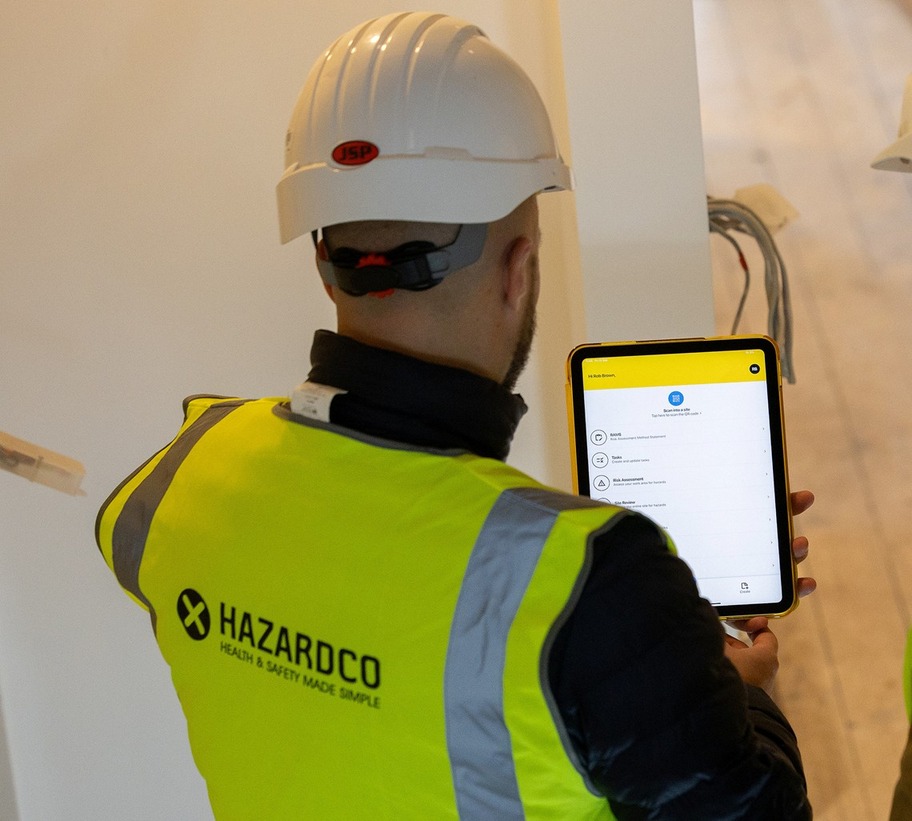
Once everyone’s shared their list, use the HazardCo Toolbox Meeting feature to record and combine the results into a master list of the biggest hazards in your workplace. This makes sure nothing important gets missed and gives your team a clear safety focus.
Step 2: Take Action
Now that you know the biggest risks, it’s time to do something about them. This list can help your workplace:
- Write better Risk Assessment, Method Statement (RAMS) – making sure all work activities are properly assessed and controlled.
- Update safety policies – making sure they actually match the hazards people face.
- Make safety part of team meetings – keeping everyone aware of what to watch out for.
- Create better training – so new and current workers know how to stay safe.
By using HazardCo’s Toolbox Meeting feature, all of this is tracked and recorded, so your team has solid proof of what’s been done to make work safer.
Why This Matters
Incidents at work can be serious, but most of them can be prevented. This simple 30-minute exercise gets everyone involved, so safety isn’t just a rule—it’s part of the way your team works. Plus, with HazardCo’s easy reporting tools, you can keep improving and stay ahead of risks before they become real problems.
So next time you’re in a toolbox talk, speak up—your input could stop someone from getting hurt.
If you have any questions, reach out to the HazardCo team. We are always happy to help.
Summer is here – longer days, sunshine, and the outdoors sound like the perfect conditions to get all that work done but with summer comes a new set of risks you’ve got to stay on top of. Have you thought about what you are doing to protect your team from the effects of the summer sun and heat?
Stay cool, seek shade and stay safe to minimise the risks of sunburn and skin cancer, but we also need to be aware of heat exhaustion, dehydration and fatigue.
Know the signs
Heat exhaustion can sneak up on you when you’ve been sweating a lot and not replacing your fluids. If it’s not treated early, it can lead to heat stroke, which is much more serious.
Heat stroke occurs when the body can’t keep itself cool causing a high body temperature of 39.4 degrees or more.
Heat rash and heat cramps are the early stages of heat exhaustion. Knowing the signs and what to do will help prevent the onset of heat exhaustion or worse, heat stroke.
Check out this resource that gives some handy tips on symptoms and treatment options for common heat-related stress.
If you’ve got a health condition that could be made worse by extreme heat, have a quiet word with your manager or supervisor so they can help you manage it.
Simple ways to stay safe this summer
- Plan your day: The sun is strongest between 11am and 3pm. Where you can, shift the heavy or outdoor work to the cooler times of the day, and take more breaks during the hottest part.
- Keep your fluids up: Don’t wait until you’re thirsty. Keep sipping water throughout the day to stay hydrated.
- Cover up: Even on cloudy days, UV rays can get through. Wear sunblock, a wide-brim hat, and lightweight long-sleeve clothing to protect your skin.
- Take it easy: Pace yourself and share the load. Rotate tasks with your crew so no one is stuck doing the hard stuff all day in the sun.
- Listen to your body: Feeling tired, dizzy or sick? Take a break in the shade and grab some water. Don’t push through — fatigue makes it harder to think straight and that’s when accidents happen.
Don’t forget to talk about it
Make sun safety part of your Toolbox Talks during summer, it’s an easy way to remind the team about the risks and what to do about them. You can record your talk straight into the HazardCo App.
Got questions or want to talk about how heat could impact your work? Give our Advisory Team a call on 020 4571 3920 (option 3), we’re here to help.
Get your team scanning in and out – it’s a no-brainer!
We get it, health and safety chats aren’t always the most exciting. But they are the most important. When everyone on-site takes part, it makes a big difference. And the easiest place to start? Get your team and subbies scanning in and out of site each day.
Your HazardCo QR code (on your Hazard Board) makes it quick and easy and the benefits stack up:
- You’ll always know who’s on-site – even if you’re not. The info is saved to your HazardCo Hub, so you can check back anytime.
- Productivity boost – tracking trades on-site helps with timesheets and planning.
- First-time users complete a site induction – so they’re across emergency contacts and safety rules from the get-go.
- Access to your Construction Phase Plan (CPP) – key hazards, emergency plans, and control measures all in one place.
- Communication – Workers can see site notices straight in the app, so it’s easy to keep everyone in the loop.
Scanning in each day is also a good nudge to stay switched on about safety. The more we talk about it, the more we act on it, spotting hazards and taking care of each other.
It also helps you:
- Share the safety responsibility across the team.
- Look after lone workers by tracking check-ins.
- Keep a clear record in case there’s an incident or investigation.
Need help getting the team onboard? Try this:
- Use your next Toolbox Talk / Safety Briefing to show everyone how to scan in with the QR code.
- Offer your team a Friday shout if everyone scans in all week.
- Make it part of your contracts. and set that expectation from the start
There’s no downside, scanning in is fast, easy, and helps everyone go home safe. Got questions? Get in touch with the HazardCo team. We’re here to help.
Respiratory Protective Equipment (RPE) is a critical layer of defence for workers exposed to airborne hazards like dust, fumes, vapours, But not all RPE offers equal protection, and even the best equipment won’t keep you safe if it doesn’t fit properly, isn’t suited to the task and things it’s filtering, or isn’t well maintained.
Here’s what you need to know about getting RPE right, from upfront fit testing to choosing the right cartridges, to regular check-ups and health monitoring.
Step 1: Get Fit-Tested – One Size Doesn’t Fit All
Before a worker ever steps into a hazardous area, they need to be fit tested for the right RPE. Why? Because no two faces are the same. RPE comes in different sizes typically ranging from Small to Extra Large, and a poor fit can mean poor protection, even if the mask looks like it fits.
Key considerations:
- Fit testing is essential for “negative pressure” RPE like half-face or full-face respirators.
- Fit testing ensures that the mask seals properly and provides effective protection.
- Facial hair, even stubble, will destroy that seal. If workers choose to keep facial hair, consider positive pressure powered respirators that don’t rely on a tight face fit. But be aware they carry more cost and size.
Fit testing must be:
- Conducted before first use of RPE.
- A fit test should be repeated whenever there is a change to the RPE type, size, model or material or whenever there is a change to the circumstances of the wearer that could alter the fit of the RPE; for example:
- Weight loss or gain;
- Substantial dental work;
- Facial changes (scars, moles, effects of ageing etc)
- Facial piercings;
- Introduction or change in other head-worn personal protective equipment (PPE).
- This is done with qualitative (using taste or smell) and quantitative (using specialised equipment), and is performed by a competent person trained and certified in how to do it. Competence can be demonstrated by accreditation under the Fit2Fit RPE Fit Test Providers Accreditation Scheme
Fit testing is also a great opportunity to train workers on how to wear and check their masks properly, which brings us to the next step.
Step 2: Choose the Right RPE for the Risk
Not all filters protect against all hazards. It’s essential to choose RPE that’s targeted to the type of contaminant and the task at hand.
Types of RPE include:
- Disposable respirators -In reality you will struggle to convince WorkSafe that this is ok, as even disposable masks have to be fit tested according to the standards, so you are far better off skipping these for better protection.
- Reusable half- or full-face respirators (negative pressure systems) – used with interchangeable cartridges that target specific hazards.
- Powered Air Purifying Respirators (PAPRs – Positive pressure systems) – provide more filtered air than you can breathe to keep any contaminants away from your breathing zone, these can be more comfortable for long term wear as they keep fresh air moving over you.
- Supplied air respirators – used only in high-risk environments where there isn’t oxygen in the atmosphere, they can be “supplied” which uses a compressed air line to the set or a “self contained” system like you see fire fighters use.
To get this right, consider:
- What is the form of the contaminant? Dust, gas, mist, or vapour? Each requires a different filter or cartridge type.
- What do the Safety Data Sheets say? (SDS) Can you get an SDS for the substances you’re working with? And what do they recommend?
- What level of activity is involved? Light vs heavy work, short vs extended durations, confined spaces – all affect your choice of gear.
- Is the RPE compatible with other PPE (like safety glasses, helmets, or earmuffs)? Full face respirators are far better than half face ones as they also protect your eyes from the dust and chemicals.
- What level of comfort is needed? If RPE is uncomfortable, workers are less likely to wear it correctly or consistently.
Important: Choosing the wrong size or type of RPE will give the illusion of safety, while leaving workers dangerously exposed. There is a world of difference between “looks safe” and “is safe”
Step 3: Maintain the Protection Over Time
Once the right gear is chosen and correctly fitted, the work doesn’t stop. RPE needs to be maintained, checked, and re-evaluated regularly.
What ongoing checks are needed?
Daily visual inspections
Before each use, workers should inspect their gear for cracks, tears, wear, or contamination. Damaged RPE should not be used.
Filter and cartridge replacement
There’s no one-size-fits-all rule for changing filters – check with your manufacturer. Never rely on smell or taste to know if filters are still working – by the time you smell something, it is already damaging you.
Regular fit testing
Our faces change over time. Even subtle shifts in weight or facial structure can impact the mask’s seal. Fit2fit recommends that fit testing should be conducted at least every 2 years.
Proper cleaning and storage
Dirty or improperly stored RPE may not perform when needed. Train workers on cleaning routines and ensure hygienic storage.
Don’t Skip Health Monitoring
Even with the best gear, health monitoring plays an essential role in a full respiratory protection programme. It’s how you check whether control measures (like RPE) are really working, and catch signs of harm early.
Under The Control of Substances Hazardous to Health Regulations 2002 , you’re required to monitor workers’ health if they’re exposed to substances that pose a serious health risk.
Health surveilance can include:
- Initial screening questionnaire to identify potential health concerns.
- Lung function tests
- Regular checks if there’s known long-term exposure to hazardous substances.
- Investigations if symptoms or health concerns arise.
Final Thoughts: Protecting People, Not Just Ticking Boxes
RPE isn’t just a piece of kit, it’s a commitment to keeping people safe. By following these three steps:
- Upfront fit testing
- Choosing the right RPE and cartridges for the job
- Ongoing maintenance and health checks
You’re doing more than following regulations. You’re creating a culture where safety is personal, proactive, and properly managed.
The right mask, worn the right way, backed by the right training and monitoring – that’s how you keep your team safe.
COSHH is a key regulation in the UK that helps protect workers and the environment from harmful substances. Managing these substances properly on-site is essential for everyone’s safety.
What are hazardous substances?
Hazardous substances can harm people or the environment. These include:
- Chemicals: Solvents, pesticides, and cleaning agents.
- Biological agents: Bacteria, viruses, and fungi that cause disease.
- Dusts: Wood dust, silica, and general dusts like gypsum.
- Fumes and vapors: From welding or chemical reactions.
Understanding what substances are present in your workplace is crucial for ensuring safety. If you use hazardous substances at work, you must store, use, transport, and dispose of them safely to reduce risks.
What is a hazardous substances register?
A hazardous substances register is a list of all dangerous substances (and hazardous waste) used, handled, or stored at your sites. It helps you:
- Track substances on-site.
- Follow safety measures.
- Know what to do in an emergency.
Keeping a COSHH register
While a COSHH register isn’t legally required, it’s a helpful tool. It’s not the same as a COSHH assessment (more on this below) but lists the substances you’ve assessed, including:
- The substance’s name.
- A current safety data sheet (SDS), which gives details on handling, storage, and emergencies.
- Where it’s stored and any specific storage requirements.
Review your register regularly to keep it accurate and up to date.
How to create a COSHH register
HazardCo members can use the Hazardous Substances Register template in the HazardCo Hub to make this process simple.
What is a Safety Data Sheet (SDS)?
An SDS provides important details about hazardous substances, such as:
- Product name, ingredients, and properties.
- Manufacturer or importer details.
- Health risks and safe handling instructions.
- Emergency response measures.
It’s the business owner’s responsibility to keep SDSs updated and ensure workers can access them.
COSHH assessments
COSHH assessments are legally required for any hazardous substances. These assessments evaluate risks and outline control measures. Here’s how to do one:
- Identify hazards: Know which substances are hazardous and how they can affect health.
- Evaluate risks: Check exposure levels and potential health effects.
- Implement controls: Use measures like PPE, ventilation, or alternative substances to reduce exposure.
- Monitor and review: Regularly update the assessment and controls.
Need help?
If you need support with your hazardous substances register or want more information, contact the friendly HazardCo team – we’re here to help!
Lithium batteries are common in everyday life and on the worksite, their lightweight, long life, interchangeability and quick charge benefits mean that they are now used in everything from laptops to power tools to EVs. But did you know that they pose a significant risk and need to be a part of your health and safety plan?
What’s the risk?
Lithium batteries of all sizes have the potential to overheat and catch fire. The fire is hotter, harder to put out and the smoke from these fires is incredibly toxic. Lithium batteries generally overheat if they get wet, damaged or are used with incorrect charging equipment.
Damaged batteries can explode at any time giving off flames that burn anywhere between 500 and 1000 degrees celsius. These fires are very difficult to extinguish as both water and CO2 will only suppress the fire, not extinguish it. Even if the fire has been suppressed it can still ignite again if the battery still contains energy to burn. Lithium batteries are also prone to thermal runaway, which is where one small fault can spread quickly through the battery causing a rapid increase in temperature and potential explosion.
Because of this, lithium batteries need to be properly cared for according to the manufacturer’s instructions to minimise the risk, aside from that, you need a plan in place in case of a fire.
Hot tip: The bigger the battery the bigger the risk of fire and explosion because of the increase in stored energy being released, think energy in = energy out almost instantly so take extra care with larger battery packs – like the ones in your hand held power tools.
Ways to minimise the risk
- Storage: Keep lithium batteries away from spaces where a fire could ignite other things and spread easily. Also, keep them away from extreme temperatures and moisture.
- Charging:
- Always use the correct charger for the battery and do not over charge. Incompatible chargers lead to overcharging and overheating increasing the risk of fire.
- Do not leave batteries charging overnight or unattended. Noise and smoke are early warning signs.
- Consider using a smart charger that monitors battery status and can disconnect power if there is a fault.
- Remote disconnection: Provide easily accessible means for remote disconnection of the battery, think about if you would need to move past it to switch it off at the source if it went up.
- Enhanced fire safety measures: Put in place fire-resistant measures near charging sites. For example; Smoke alarms and fire extinguishers (Class D or lithium fire blankets). Wherever possible charge in a cool dry place that lessens the chance of a fire getting into a structure.
- Monitor: Always check equipment for damage during and after use. Damage could include signs of being dropped, crushed or punctured.
- Emergency preparedness & PPE: Develop emergency response plans specific to lithium battery fires, including clear evacuation instructions. Provide clear training on the dangers, insulated tools and appropriate personal protective equipment (PPE) such as insulated gloves for employees involved in any equipment/battery maintenance, or better yet, give it to a professional to get it checked.
Safe lithium battery disposal
Never dispose of Lithium batteries in general rubbish as it can result in a fire in your bin or on the way to a transfer station, creating a risk to those transporting them. The manufacturer should be able to advise safe disposal or check out your local battery recycling centre.
Lithium batteries are going to continue playing a crucial role in our workplaces and lifestyles, so it’s necessary to recognize the potential hazards associated with them. By having awareness of these risks and good practices, we can work together to reduce the potential dangers, resulting in safer working environments where Lithium batteries are used.
If you have any questions, get in touch with the Hazardco team today!
Working with heavy machinery and managing traffic on-site can be risky. But with the right checks and planning, we can keep everyone safe.
Daily machinery checks
Before starting work each day, make sure your equipment is ready to go:
Visual checks (before starting the machine):
- Check fluid and oil levels; look for leaks.
- Check tyres are in good condition and free from damage
- Confirm safety mechanisms are in place and working.
- Make sure warning signs are visible and readable.
- Inspect attachments, clips, and pins for damage.
- Look over hydraulics for any issues.
Stationary function test (with the machine on):
- Test the horn and reversing alarm.
- Check that lights, pedals, and controls work properly.
- Move the bucket and arms to ensure they operate smoothly.
Moving function test:
- Test the steering.
- Ensure brakes are functioning correctly.
Using your manufacturer’s checklist or the HazardCo Heavy Machinery Prestart checklist can help you cover all these points.
Managing site traffic
Keeping vehicles and people safe on-site requires a solid traffic management plan. Here’s what to consider:
- Traffic direction: Plan routes for vehicles, cyclists, and pedestrians.
- Delivery areas: Set up clear zones and schedules for loading and unloading.
- Site layout: Define speed limits, traffic flow, and place barriers or fences where needed.
- Safe practices: Establish procedures for loading, unloading, turning, and reversing.
- Site restrictions: Be aware of noise levels and traffic volume.
- Unattended sites: Plan how excavations are managed when no one is around.
- Emergency procedures: Have clear steps in place for emergencies.
- Training and Instruction: All workers should receive an appropriate site induction to ensure the traffic management plan is communicated and followed.
Discuss this plan during site inductions so everyone knows the rules and expectations.
Know your limits: Zone of influence
Heavy machinery can affect the stability of excavations if operated too close. Keep all heavy vehicles, materials, and spoil at least one meter outside the zone of influence (this may be greater depending on the ground conditions) unless specific designs support closer operations.

Preventing tip-overs
Uneven ground can cause machinery to tip over, leading to serious injuries. To prevent this:
- Planning: Supervisors and operators should assess the area before work begins.
- Risk assessment: Identify potential hazards, before starting each job.
- Safe routes: Choose the safest paths for moving machinery.
- Digging practices: Never dig underneath an excavator.
- Distance: Work at a safe distance from excavation edges.
- Procedures: Have standard operating procedures in place.
- Design: Ensure work areas are designed to control hazards.
- Safety features: Equip cabs with roll-over protection; operators should wear seat belts and keep doors closed.
- Exits: Ensure there are always two exits from the excavator.
If you would like more information head over to our website or to chat with one of our friendly Advisory team please give us a call on 020 4571 3920
Using demolition machinery can be dangerous if it’s not handled correctly or by trained operators. Mistakes often happen when training is missed or safety checks are skipped. By making sure your team knows what to do and checking your machinery daily, you can avoid accidents and keep the worksite running smoothly. Here are some simple steps to help you use machinery safely and avoid problems.
Training and supervision
Make sure your team has the right information, training, and instructions required for the task. Having the right people involved means workers will have the skills and experience needed to complete the job safely and the task hazards will be easily identified.
Workers should be adequately trained to operate machinery. To test this knowledge, workers should be monitored and assessed regularly against operating procedures.
Pre-start checks
Always check your equipment is fit for use at the beginning of each day.
A trained and competent machinery operator should be conducting a plant/machinery pre-start check before use. This gives you the certainty that your equipment is good to go for the day and won’t cause you any unexpected problems or delays. Things to check are:
Visual checks before turning the equipment on:
- Fluid and oil levels are sufficient and no leaks
- The battery is clean and charged
- Safety mechanisms are in place, working, and not damaged
- Warning signage is in place and readable
- Attachments, clips, and pins are in working order and without damage
- Hydraulics are undamaged and lubricated
Stationary function test while equipment is on:
- Horn and reversing alarm sound
- Control panel, lights and pedals are all fully operational
- Bucket and arms fully extend and tilt as required
Moving function test:
- Steering is in good order
- Brakes function
Quick hitches, safety locks and exclusion zones
Quick hitches allow you to quickly and easily change buckets or attachments on your machinery. Approximately 13% of all accidents investigated on excavators are attributed to the bucket detaching from a quick hitch device and injuring a ground worker. These are mostly fatal and major injuries. When using quick hitches and attachments you should always check the following:
- Is the attachment the right size and is it in working order
- Has the attachment been fitted correctly
- Is the safety locking pin in place and secured
- Has an exclusion zone been set up
Failing to check these could mean your bucket becomes detached or someone could get hit.
All quick hitches should clearly display the following information:
- the model and serial number
- the manufacturer’s name
- the weight and maximum rated capacity
- each lifting point’s capacity.
Quick hitches used with excavators are required to have a thorough examination by a competent person. If permanently attached this should be done 12 monthly else if not permanently attached it’s 6 monthly.
Safety locking pins need to meet the quick hitch manufacturer’s specifications and should be kept with the machinery or quick hitch device when not in use. Ensure that attachments are fitted with the correct pin centres and diameters.
Exclusion zones should be clearly marked out and all those working nearby should be informed. The hazards, risks and controls for machinery on-site should be covered in your job safety plan and shared with all on-site.
If you have any questions get in touch with the HazardCo Team today
The HazardCo App has a new Plant/Machinery Pre-Start tool! It’s a quick and easy way to do pre-start checks on various plant and machinery such as scissor lifts, boom lifts, and excavators. Just whip out your app, follow the guided prompts, and you’ll know all your reports are saved for safekeeping.
This is a great new tool for those currently filling in the log book that stays with the machine, causing lots of painful admin work to gather and compile the information for your records.
Why conduct pre-start checks?
Pre-start checks are a simple way to check that your plant and machinery are up to scratch before use. Whether it’s hired or owned equipment, a quick check will help you to identify any potential issues that could impact the safety of your team or the performance of the machinery. By referring to the manufacturer’s instructions and best practices, workers can make sure the machinery they have is in a safe condition to be used, and if not, the HazardCo App gives you an easy way to communicate the issues happening on the ground to the right people. When done well, pre-start checks go a long way to preventing incidents and equipment failures.
When to use the Plant/Machinery Pre-Start tool
The Plant/Machinery Pre-Start tool should be used before the operation of any plant or machinery. You can find it in the main menu of the HazardCo App. Once a pre-start check is completed, the report is automatically saved to the Reports section in the Hub and the App for easy access in the future.
Benefits for workers: The Plant/Machinery Pre-Start tool provides an easy way to follow pre-start procedures. It helps you communicate any issues that need to go up the chain and make sure information isn’t lost or misunderstood.
Benefits for workers: This tool is a quicker and easier way to maintain evidence of your team’s safe work practices on-site. Anyone on-site can use the HazardCo App to complete a Plant/Machinery pre-start, you’ll be able to see it’s been done, and you won’t need to find and scan physical log books anymore!
We get it — figuring out what to do after an incident or near miss on-site can feel a bit overwhelming. One of the most common things our Advisory Team hears is, “Do I need to report this?” If it’s a notifiable event, you have a legal duty to let the Health and Safety Executive (HSE) know under Reporting of Injuries, Diseases and Dangerous Occurrences Regulations (RIDDOR) – Sounds like a lot of paperwork right? Not with HazardCo, our App makes it easy to log an incident or near miss and we’re here to guide you with what to do next!
Let’s break down RIDDOR in plain language. It’s basically the UK’s system for tracking workplace incidents and near misses.
What is a notifiable event?
RIDDOR stands for Reporting of Injuries, Diseases and Dangerous Occurrences Regulations. It’s the rules about which workplace incidents you need to tell the authorities about.
What needs reporting?
- When someone dies in a work incident
- Serious injuries like broken bones, amputations, serious burns
- When someone can’t do their normal job for more than 7 days because of an injury
- Work-related illnesses
- Dangerous occurences that could have been serious e.g. collapse of a structure or scaffolding
- When a visitor or member of the public gets hurt and needs hospital treatment
Who’s responsible?
- Manager/Supervisor
- Self-employed folks
- Anyone in charge of a workplace
When to report?
- Deaths or serious stuff: pretty quick (reportable within 10 days)
- 7 day absences: reportable within 15 days
- Illnesses: once a doctor confirms it
- Near misses: right away
Why report near misses and incidents?
Every time you report an incident or near miss, you’re helping make the site safer. It’s not about pointing fingers — it’s about learning from what happened and stopping it from happening again. Everyone on-site has the right to know about any risks, and we all play a part in keeping each other safe.
Creating a culture where everyone feels comfortable reporting issues means better communication and fewer surprises.
How to report in the App
It’s easy:
- Open the HazardCo App
- Use the Report Incident feature
- Fill in what happened (photos and details help!)
Your report is saved in the Hub and kept on file while you’re a HazardCo member
What happens next?
The App will prompt you to give us a call if needed. Our Advisory Team gets a copy and will:
- Check if it’s a notifiable RIDDOR event
- Contact you if it is notifiable
- Guide you through how to notify HSE and help with any follow-up steps
We recommend:
- Taking photos of the scene, where appropriate
- Completing a Site Review
- Sharing learnings in a Toolbox Talk (both available in the App)
Keep records
You’re legally required to keep these records for at least 3 years. Logging everything in the App means it’s all saved in the Hub, organised and easy to access if you ever need it.
No one wants incidents to happen on site, but being prepared makes all the difference. Stay calm, follow the steps, and give us a call if you’re unsure. Our Advisory team is available 24/7 for serious incidents.
Got a question? Reach out to us today — we’re here to help.
Looking for something in particular?
When we think about the risks of working at height, our minds often jump straight to the danger of a person falling. But there's another serious hazard that deserves just as much attention — f...
It's hard to ignore AI right now, and if you're wondering whether you can trust it and where it actually fits in your business, you're asking the right question.
Every tradesperson knows th...

Running a building business is hard at the best of times. Right now, with fuel prices putting pressure on the industry, a lot of business owners are carrying a weight that goes well beyond the...

There are over 5,000 asbestos-related deaths each year in the UK, including mesothelioma, lung cancer, and asbestosis. Despite being banned, asbestos remains one of the most significant workpl...

If you've heard the term Principal Designer but aren't quite sure what it means for your business, you're not alone. It's one of the most misunderstood roles in UK construction, yet getting it...
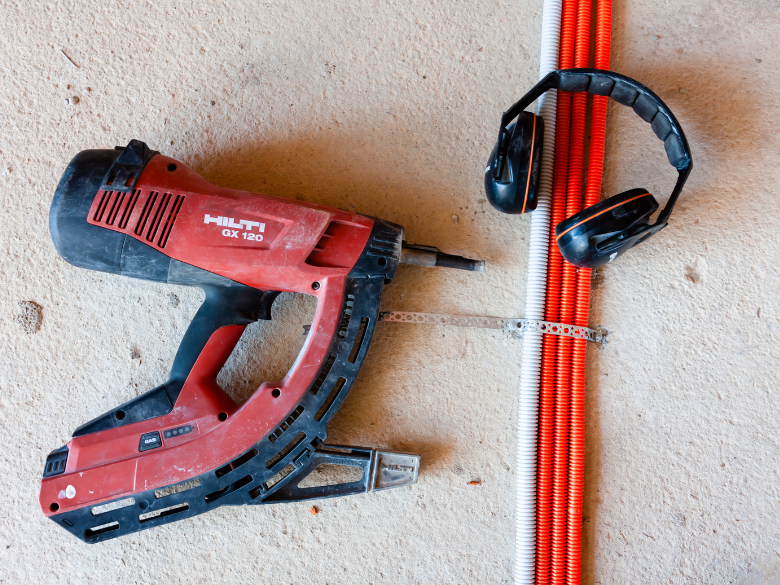
Nail guns are common on construction sites. Like any power tool, they can cause serious injuries if not used properly.
Most injuries happen when the gun discharges while being moved or repo...
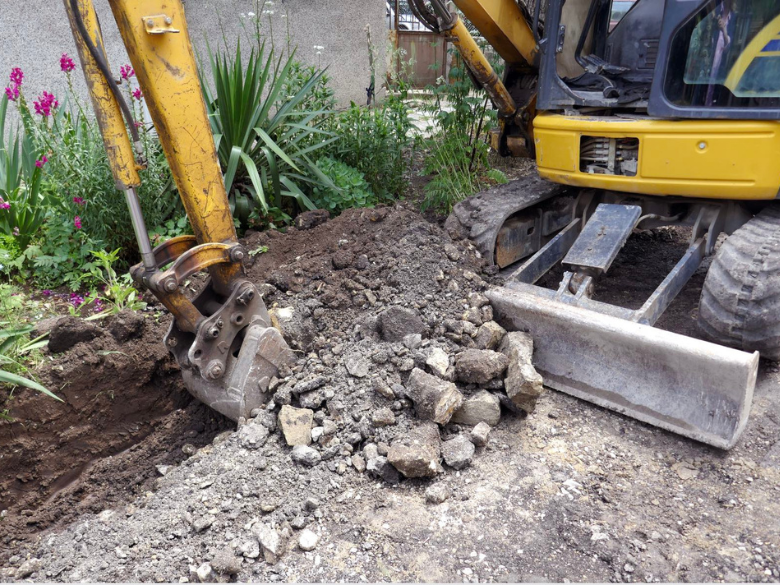
Moving or removing earth or other materials with tools or equipment is generally classed as excavation work. Excavations are used in a number of different situations, such as during the constr...

Wet weather has the potential to hit hard, with heavy rainfall, surface water and muddy ground all creating hazards for you and your workers. From slips and trips on saturated surfaces, to red...
The holidays are over, the tools are coming back out, and it’s time to ease into the New Year. Reopening your site is just as important as shutting it down properly and January is the perfect ...

The Health and Safety Executive (HSE) recovered £4.5 million through its Fee for Intervention (FFI) scheme in 2024/25, charging 5,143 businesses for health and safety breaches. With an average...
The Christmas break is nearly here. You're probably counting down the days until you can relax and spend some proper time with the family and friends.
But before you lock up for the holiday...

A recent prosecution has highlighted how, even when a death is not caused directly by Health & Safety failings, but - neglect of Health & Safety can still land a site manager in court....