Maintaining clean amenities is just as important as keeping your site nice and tidy. Employers have a duty to provide adequate workplace amenities/facilities, including toilets, that are in good working order, clean, safe and accessible.
When planning amenities on your site, consult with your workers to understand what will be needed. Getting them involved will give you the opportunity to provide information, training and instruction on things like keeping the site amenities clean and reporting any problems.
Portable Toilets
More often than not portable toilets are not maintained in a safe or hygienic way. Employers must make sure that toilets are cleaned and serviced regularly, making sure they are safe to use, just like any other on-site machinery.
Toilets should also:
- Be completely enclosed, to ensure privacy
- Be provided with a door that can be locked from the inside
- Have enough water for flushing and washing hands
- Stocked with toilet paper, rubbish bins and hygienic means to dispose of sanitary items
- Supplied with soap or a suitable alternative such as alcohol based sanitiser
Don’t forget, the toilet should be easy to access in all weather conditions and be placed on stable, flat ground to ensure it can operate properly.
Drinking water
Clean drinking water must be supplied to workers by installing site water taps as early as possible. If the mains have not been connected, provide workers with drinking water in containers, coolers or flasks.
Meal and shelter facilities
Workers should have a clean and sheltered area for meals and rest breaks. A garage or a similar sheltered area can be used or a vehicle cab if there is no other reasonably practicable option, so long as basic requirements for worker rest can be met.
Not meeting these requirements can lead to a risk of infection, disease, psychosocial harm or infringements/enforcement from the Regulator. Planning is key to ensuring you and your team have what you need in place from start to finish.
As always, if you have any questions please give our team a call on 0800 555 339 or contact us.
On the farm or in the factory, transport is a major part of daily life, making vehicle safety a top priority no matter what you are doing. When using vehicles you can break down transport activities into distinct areas Safe Stop, Safe Vehicle, Safe Driver, and Safe Site – so that you can better identify the hazards and take proactive steps to manage the risks.
Safe Stop
The concept of Safe Stop shows the importance of proper shutdown procedures for vehicles and machinery. The steps are straightforward but critical:
- Engage handbrake: Ensure the vehicle or machinery is securely immobilized.
- Controls in neutral: Prevent unintended movement.
- Switch off engine (or turn off power): Shut down the engine or power source.
- Remove key (or lock-off the power supply): Securely store the key or disable the power supply.
Following Safe Stop procedure is essential:
- Before leaving the driver’s seat.
- When anyone approaches the vehicle or machinery.
- Before any maintenance or adjustment tasks.
Safe Vehicle
A Safe Vehicle is one that is well-maintained and suited to the tasks. Consider the following checklist:
- Make sure vehicles are appropriate for the job and equipped with necessary safety features like mirrors for reversing and clear vision in all places.
- Conduct daily inspections, quickly report and fix any faults.
- Regularly maintain braking systems to ensure effectiveness.
Additionally:
- Install roll-over protective structures (ROPS) and seatbelts on vehicles at risk of overturning.
- Protect lift truck (forklift) and loader operators from falling objects.
- Ensure trailers have brakes matched to their loads and speeds.
Safe Driver
The Safe Driver makes sure they are competent, and fit to carry out the task:
- Confirm drivers are medically fit and properly trained.
- Prevent unauthorized individuals from operating vehicles.
- Educate drivers on safe vehicle entry and exit procedures.
Passengers should only be allowed in designated seats that do not hinder the driver’s visibility or access to controls. Mounting or dismounting moving vehicles is strictly banned for safety reasons.
Safe Site
A Safe Site is characterized by organized and secure traffic management:
- Separate vehicle and pedestrian traffic whenever possible.
- Inform visiting drivers about site-specific rules and regulations.
- Minimize the need for reversing by implementing turning circles or one-way systems.
- Maintain well-lit and properly marked traffic routes.
- Ensure silos, bulk dumps and storage areas are away from overhead power lines (OHPLs).
Additional vehicle safety tips include:
- Avoid approaching or walking near reversing vehicles.
- Use audible alarms on vehicles which activate when reversing.
- Provide separate doorways for vehicles and pedestrians in buildings.
- Wear high-visibility clothing to enhance visibility of people to the driver.
By addressing these four key areas—Safe Stop, Safe Vehicle, Safe Driver, and Safe Site—you can significantly improve transport safety.. Regular training, clear procedures, and a commitment to proactive safety measures are essential for protecting everyone involved in transport and vehicle movements.
If you need any advise get in touch or give the HazardCo team a call on 0800 555 339
Looking for something in particular?

We’ve all been the new starter on-site, keen as mustard, but probably a bit green behind the ears. While it’s great to see young legends joining the trade to secure a future for themselves and...
Managing health and safety across your workplace just got simpler. We're excited to introduce Workplace Safety Projects – a new tool that helps you keep on top of your health and safety manage...

Each year, more NZ tradies are turning to digital tools and software to streamline their work both on-site and in the office. From electricians to plumbers, carpenters to landscapers, those wi...

The building industry is moving fast, and in 2026 the businesses that stay ahead will be the ones using smart, practical tech to save time, protect margins, and reduce admin. From estimating a...
As a leading Health & Safety provider in NZ, we are staying close to the proposed changes to the H&S regulations and working to influence changes where we can. When new rules do come t...

NZ weather changes fast and when it does so do the hazards on your site. Strong winds, extreme temperatures, and heavy rain can quickly lead to slips, trips, heat stress, damaged gear or vehic...
If you run a ute, van, or light truck for work, big changes are coming to how you pay for New Zealand’s roads. The Government has confirmed it’s moving away from petrol excise at the pump and ...

You might’ve seen the latest headlines about H&S reforms. The government’s still working through the details, so we don’t have any concrete updates for you just yet. But here’s the key thi...

Want an easy way to make your workplace safer without spending a cent? Here’s a simple trick that takes just 30 minutes and can help prevent incidents on the job.
Step 1: Spot the Hazards
Wh...
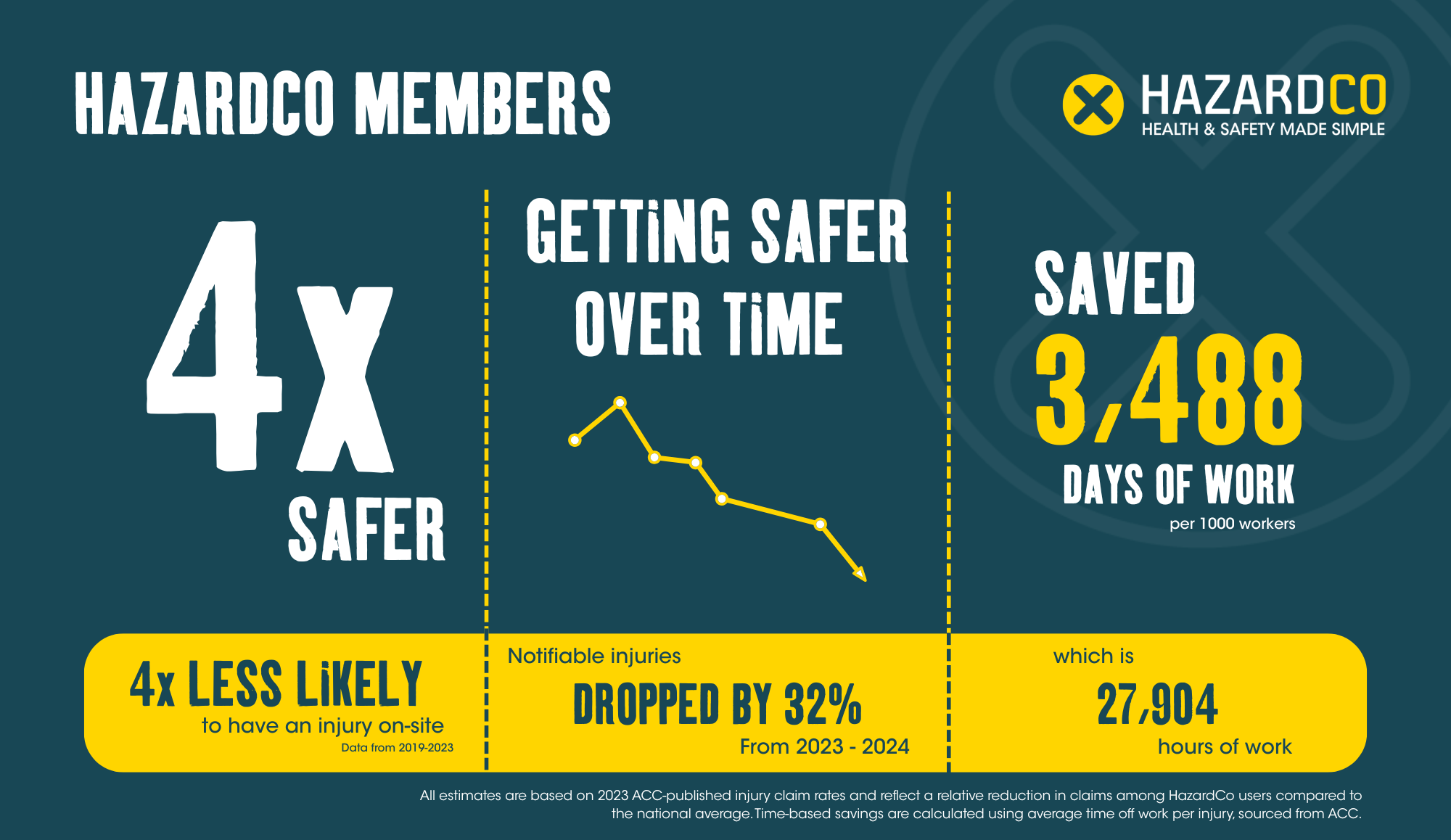
At HazardCo, we’re all about making health and safety simple – and it’s working. New data shows that our members are safer on site compared to the national average. Whether you’re on the tools...

There’s major HR changes on the way for how Kiwi businesses manage contractors, and if you run a construction company, are a tradie, or work with subcontractors, this is something you need to ...

Hand and finger injuries are one of the most common injuries on-site. Over the last year, HazardCo has received 4599 incident reports – 720 of those were hand or finger injuries. That highligh...