


Working on a HazardCo site? One tool, all corners covered – in your back pocket!


Contractor Management: Who’s responsible for what?
Aug 11, 2026
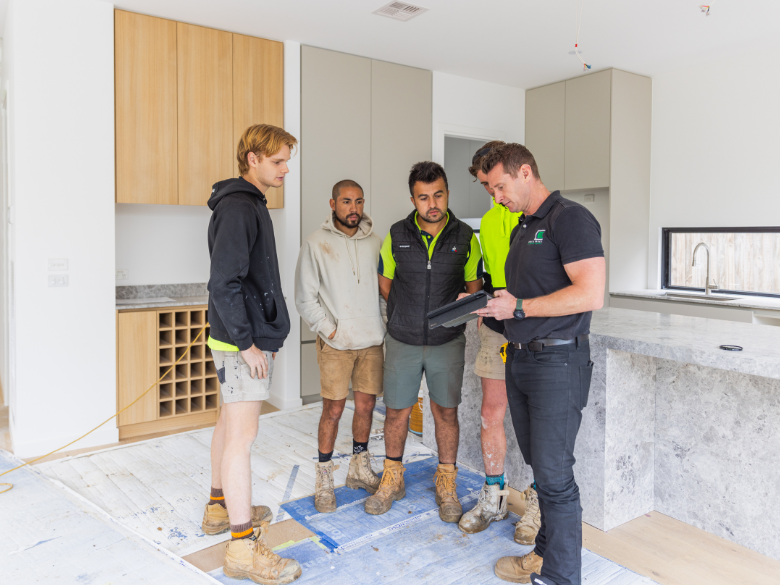
Health and safety takes teamwork. Here’s a simple guide to managing shared responsibilities on site.
On any project, more than one contractor is usually involved — and everyone has a part to play in keeping people safe.
Everyone on a project has a clear role, called a duty holder:
- Client — the person the work is being done for
- Principal designer — plans and manages health and safety during the design stage
- Principal contractor — plans and manages health and safety while the building work is going on
- Contractors — complete task-specific building work, such as carpentry, plumbing, groundworks, and so on
- Worker — anyone doing the hands-on work
If you’re the main (principal) contractor, your duty isn’t just to your own team. You must protect anyone who could be affected by the work — that includes other contractors, their workers, and visitors.
Where jobs overlap, duty holders must cooperate, coordinate and communicate so everyone can meet their responsibilities.
Examples of Shared Duties
(Note: these are simplified to keep things clear and aren’t a full list. It’s important to know your own duties. The HSE has helpful guidance at hse.gov.uk, or you can talk to our Advisory team if you have questions.)
-
- Keeping people safe: Make sure your work doesn’t put the health and safety of your workers, or anyone else, at risk.
- Managing risk: Remove a risk if you can. If you can’t remove it, control it so it’s as low as reasonably practicable.
- Talking with workers: Give workers a way to raise concerns and share their views on health and safety — and take what they say seriously.
- Reporting: Certain serious injuries, dangerous incidents and work-related illnesses must be reported to the HSE. Report them as soon as you know.
- First aid: Make sure workers can get to first-aid equipment and a trained first aider. If you share a site with other businesses, you can agree to share first-aid cover.
- Emergencies: You must plan for emergencies on your site and keep those plans up to date. Agree on your emergency arrangements with the other businesses on site, so everyone knows what to do. On most jobs, this sits in your Construction Phase Plan.
When Might Duties Overlap?
Duties overlap on any site where more than one business and its workers affect the work. It also happens in a contracting chain, where contractors and subcontractors work for a main contractor or client, and might not even be on site at the same time.
Example: A contractor rings a supplier to drop off materials, and they agree that a lorry-mounted crane (HIAB) is the best way to deliver. The contractor tells the team in a toolbox talk that the materials are coming, asks them to clear a stable, level drop-off area, and to keep well clear of the HIAB while it’s unloading.
Understanding the Extent of Your Duty
When duties overlap, how do you know how much of the risk is yours to manage? It comes down to how much you can influence or control it. Think about:
Control over the work — are you the business running the task?
Control over the site — are you the principal contractor or a subcontractor?
Control over your team — you’ll always have more say over your own workers than over others on site.
The more control you have over the site or the workers, the more control you have over the risk — and the more responsibility sits with you.
Practical Expectations for On-Site Safety
Health and safety doesn’t start when the diggers arrive. It can begin right back at design, choosing materials, pricing, and planning the job. That’s why the client and designer are brought in early.
Keeping people safe should always come first on any site, and the law requires it. Knowing what safety systems are in place, and lining up with the other businesses on site is vital and could save lives.
To keep people safe and meet your legal duties, here’s what’s expected:
- Work with designers to design out risks early.
- Set clear health and safety expectations and write them into your agreements with contractors.
- Check that contractors have suitable health and safety arrangements in place.
- Prepare a Construction Phase Plan for the job and share it with all workers and contractors.
- Agree on how health and safety will be reported. (The HazardCo App makes it easy to create RAMS, risk assessments, incident reports, and more.)
- Make sure everyone is inducted. Share site rules with everyone who comes on site (easy via the HazardCo App as workers scan the QR code on your Hazard Board).
- Set out how information will be shared for the whole job.
- Keep communication flowing between everyone (for example, toolbox talks through the HazardCo App).
- Keep an eye on your own workers and the contractors you bring in.
Sound Contractor Management: 6 Key Steps
WorkSafe expects main contractors to follow solid contractor management processes:
- Scope: Think about the health and safety risks before you pick contractors. Talk the job through with them to check they’re up to it. Keep a record in the HazardCo Hub.
- Prequalify: Check that contractors have proper health and safety arrangements in place. Keep records of their prequalification.
- Select: Choose contractors on the back of their prequalification, along with things like availability and skills.
- Appoint: Create a Project in the HazardCo Hub — it automatically generates a Construction Phase Plan, QR code, and Hazard Board. Share this with your contractors. Make sure everyone understands the induction, and that contractors have reviewed, agreed, and recorded their acceptance.
- Monitor: Keep talking about health and safety throughout the job (toolbox talks, site reviews, inductions). Investigate incidents, chase up open issues, and review regularly.
- Review: At the end of the job, review how each contractor performed – communication, incidents, improvements, and monitoring.
Stay on Top of Checks with Automation
Get peace of mind that your contractors are good to go, with an automated system to prequalify contractors, check insurance, verify qualifications and more. Because it’s automated, you won’t have to chase contractors for missing documents — and you’ll get an alert if someone scans in who hasn’t been approved yet.
Find out more about HazardCo’s prequalification tools, or get in touch with our team on
020 4571 3920 or info@hazardco.com.