


Working on a HazardCo site? One tool, all corners covered – in your back pocket!


Heads up! The real risk of falling objects
May 15, 2026
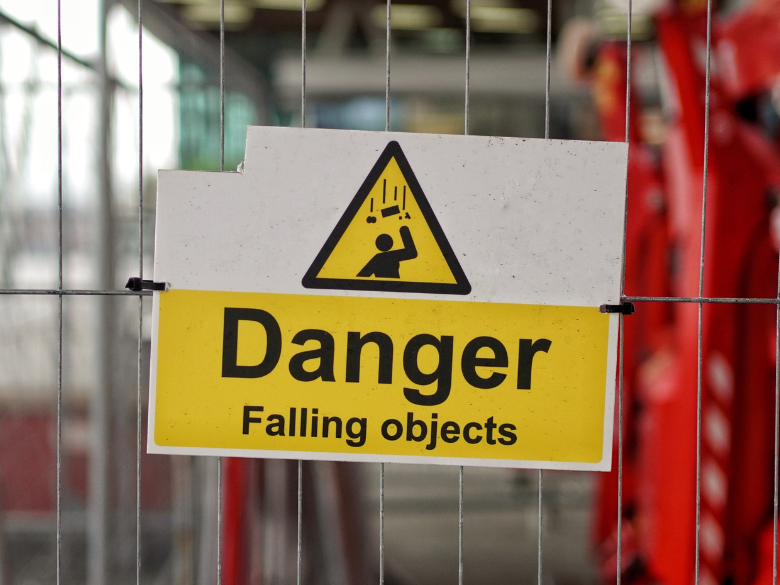
When we think about the risks of working at height, our minds often jump straight to the danger of a person falling. But there’s another serious hazard that deserves just as much attention — falling tools, equipment, and materials. A dropped spanner or an unsecured load from several metres up can cause serious injury or even death to anyone below.
We recommend carrying out a Risk Assessment to put a plan in place to manage the risks involved when working at height and there is the risk of falling objects. This will help you decide whether it’s possible to eliminate the risk of falling objects or what the most effective control/s are to minimise the risk. Always follow the hierarchy of control.
Elimination – Always the first and best option. If materials can be stored at ground level rather than on an elevated platform or scaffold, do it! Removing the hazard entirely is far more effective than managing it.
Substitute – Where elimination isn’t possible, substitution offers a practical alternative. Something as simple as swapping an open bucket for a zip-up tool bag when transporting tools between levels can make a real difference.
Isolate — Keep people away from the danger zone. Set up physical exclusion zones below overhead work and use covered walkways where people must pass through active work areas. You can also schedule work so no one is underneath when the risk is highest — sometimes the safest outcome is making sure the hazard and the person are never in the same place at the same time.
Engineer: Install toe boards and brick guards on scaffolding to prevent tools and materials from falling from edges, use barrier mesh to contain loose materials, and ensure proper edge protection is in place. Once engineered controls are installed, they do the job without relying on anyone to remember.
Administrative: Check all tools and equipment — including lifting slings and chains — are in good working order before use. Set up exclusion zones and warning signs wherever there’s a temporary falling object risk, such as when removing rubbish or debris from a roof.
PPE: This is your last line of defence, not your first. Use tool lanyards when working above others — they attach directly to the worker or structure so a slip of the hand doesn’t become a falling hazard. Hard hats must be worn by anyone working underneath elevated tasks or in any area where a falling object risk has been identified on-site.
Remember, consistency is key
Managing the risk of falling objects isn’t one person’s job — it’s a shared responsibility across every worker and contractor on-site. Supervisors and managers must ensure controls are recorded in the Risk Assessment, communicated to the workforce, and actively followed on-site.
A few moments of planning at the start of a job can prevent a life-changing incident. When it comes to working at height, protecting people from what falls is just as important as protecting them from falling themselves.
If you’ve got a question about falling objects or any other health and safety matter, the HazardCo Advisory Team is here to help. Give them a call on 020 4571 3920